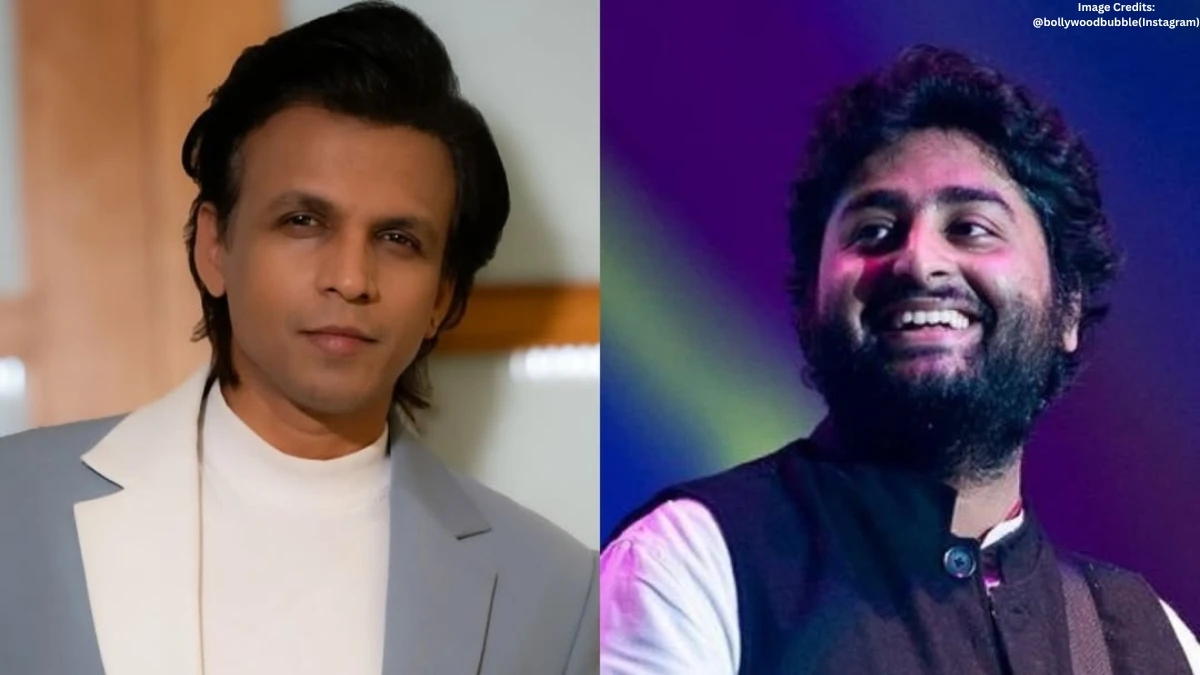

Abhijeet Sawant Supports Arijit Singh’s Decision to Quit: Playback Singers Are Exploited, Underpaid
Abhijeet Sawant has clearly supported Arijit Singh’s decision to step away from playback singing, calling it a realistic response to how the industry treats its own singers.
On 27 January 2026, Arijit announced that he would stop taking new playback assignments, saying he was “calling it off” while continuing to make independent music and finish pending film songs.
The announcement, posted around New Year on his social media, stunned fans and composers because it came at the peak of his Bollywood career.
For many listeners, it felt like the end of an era, but inside the industry it also became a trigger to talk openly about money, royalties, and respect for singers rather than just glamour on screen.
Abhijeet Sawant has used this moment to say out loud what many playback singers discuss quietly in studios and backstage corridors.
In a recent conversation on Pentarise Studios’ YouTube channel, he said singers “get exploited a lot” and that most are forced to accept whatever fee is offered because if they say no, someone else will immediately step in.
The tone was not bitter for effect; it matched the way many working singers describe struggling to build a stable life even after giving their voice to hit songs that play on TV, radio, and streaming platforms for years.
Playback Singers Are Exploited, Underpaid’ – What He Actually Means
When Abhijeet Sawant says playback singers are exploited and underpaid, he is talking about a system where voices that drive a film’s recall often do not share fairly in its long‑term earnings.
He pointed out that most singers in Bollywood get a one‑time fee for a song and still do not receive proper royalties, even when the track keeps earning for labels and producers through streams, licensing, and performances.
As an example, he mentioned composer‑producer Biddu, who earns around ₹70–80 lakh in royalties each month from just a couple of songs recorded in the West, while Indian film musicians on the same track list do not see anything close to that kind of recurring income.
The contrast shows how weak the royalty culture is for film music in India compared with some international markets.
Abhijeet also said there is a fear‑driven culture where singers agree to low or no payments just for the chance to have a song picturised on a big star, hoping the visibility will help them get more shows and brand value later.
Many playback singers end up depending heavily on live concerts and private events to support their livelihood, while the songs that made them popular belong financially to someone else.
How Arijit Singh’s Exit Sparked This Debate
Arijit Singh’s decision on 27 January 2026 to step back from playback singing turned a long‑running complaint into a national conversation.
In his detailed explanation, Arijit said there was not just one reason for this move; he spoke about creative fatigue, the need for new challenges, and his wish to focus on independent music and new voices.
He admitted that he “grew weary” of repeating the same patterns and wanted to explore different styles while fulfilling existing commitments.
While Arijit did not directly frame his retirement as a protest over money, the timing allowed others like Abhijeet Sawant to highlight how even top‑tier success can sit on an unstable base.
If one of India’s most streamed artists feels the need to step away from the system, it becomes easier for mid‑level singers to say that they “don’t even get enough money to sustain” their livelihood from film songs alone.
Inside the Payment Structure: Why Many Singers Feel Stuck
Behind every big Bollywood track, the payment structure is often far less glamorous than the music video suggests.
Abhijeet explained that playback singers are usually paid a fixed amount per song, after which most of the long‑term benefits flow towards labels, producers, and sometimes actors whose faces are attached to the track.
Musicians and singers in film projects commonly sign contracts that give away royalty rights, leaving them dependent on one‑time cheques and performance opportunities.
He also described a pattern where newcomers agree to sing for very low fees or even work free for big banners, just to get their “break,” which then sets a low benchmark for everyone else.
Over time, this normalises underpayment, because producers know there will always be another eager singer ready to accept less. In simple terms, the bargaining power usually sits with the gatekeepers, not with the voices that listeners remember.
Real‑World Impact on Singers’ Lives
For many playback singers, the struggle shows up in everyday things, not just in headlines about contracts and royalties.
Abhijeet noted that even names the public recognises from reality shows or hit songs sometimes need to constantly tour smaller cities, weddings, and corporate shows to maintain a consistent monthly income.
The glamour of a viral film song does not always translate into predictable earnings, especially when royalties are missing and streaming payouts are routed primarily through labels.
A typical situation may look like this: a singer records a romantic track for a major film, gets a fixed fee, then watches the same song cross hundreds of millions of streams and become a staple at concerts, clubs, and TV shows without any extra share coming directly from those plays.
Over time, this gap between public fame and financial security can push artists towards burnout, side jobs, or a shift to independent music scenes where they control their masters and distribution.
Why Abhijeet’s Comments Matter Right Now
Abhijeet Sawant’s remarks matter because they come from someone who has seen both sides: a high‑visibility reality‑show win and the slower, tougher grind of staying relevant as a playback singer.
His statement that “people don’t want singers to become bigger than the film” captures how some parts of the industry still resist giving singers too much power or share of the revenue pie.
At the same time, his comments also show that singers themselves sometimes trade fair pay for proximity to big projects, which keeps the cycle running.
This is why Arijit Singh’s timing and Abhijeet’s criticism are being discussed together in February 2026 across news reports, social media, and industry panels. Both highlight a central question: if the voices behind the biggest Bollywood songs feel underpaid, overworked, or creatively trapped, the system may need more than just a few polite adjustments.
For listeners, understanding these issues adds another layer to every soundtrack, turning a simple playlist into a reminder of the people whose livelihoods depend on fairer music practices.
Disclaimer: This Information is based on currently available news reports and public statements and is intended for general information and awareness, not as legal, financial, or professional advice.