
Doomsday Clock 2026: Why It Is Now 85 Seconds From Midnight
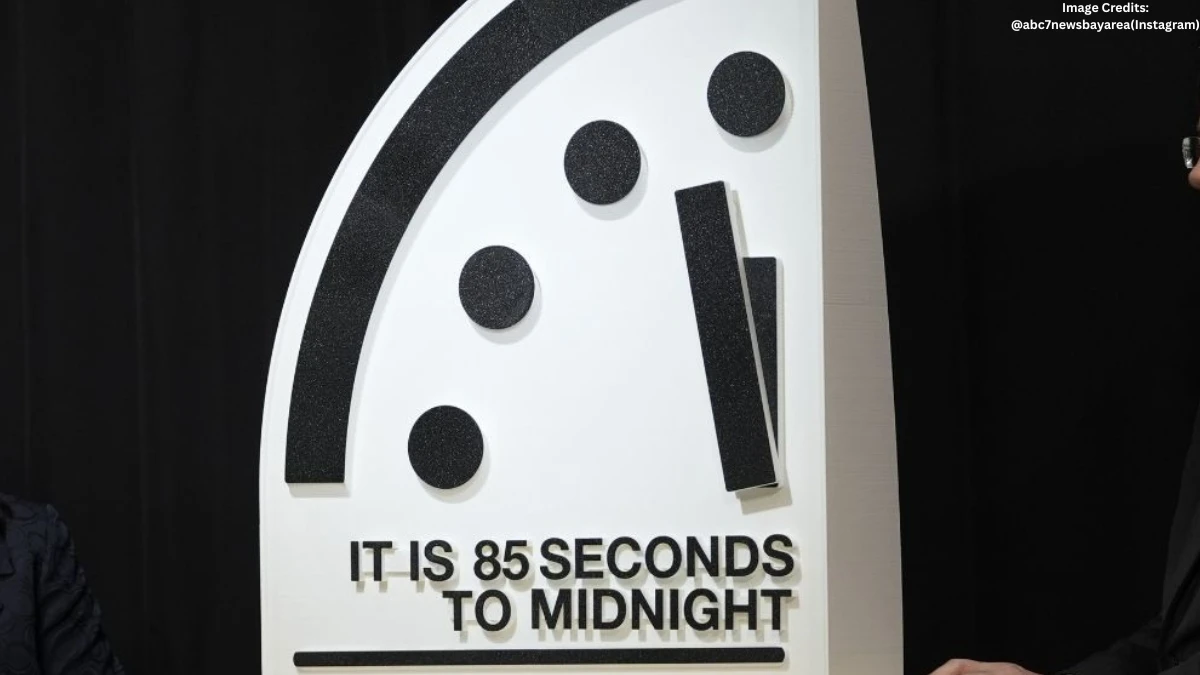
The Doomsday Clock in 2026 has been set to 85 seconds to midnight because global risks from nuclear weapons, climate change, wars, and fast‑moving technologies like AI have all intensified instead of easing.
On 27 January 2026, the Bulletin of the Atomic Scientists announced that the clock hands were moved forward by four seconds, making this the closest symbolic point to “global catastrophe” since the clock was created in 1947.
It is not a prediction that the world will end at a specific time, but a strong warning that current trends are pushing humanity into a more dangerous zone than even the Cold War era.
What Changed in 2026?
The time shifted to 85 seconds because multiple crises are piling on at once: nuclear tensions, climate impacts, regional wars, biological risks, and misinformation powered by artificial intelligence.
Arms control treaties are eroding, with key agreements between major powers either expired or close to expiring, raising fears of a new nuclear arms race rather than disarmament.
At the same time, hotter years, extreme weather, and slow progress on climate action show that emissions cuts are still not matching what scientists say is needed, especially after record heat and climate disasters in recent years.
Key Reasons It Is So Close to Midnight
The scientists highlight a mix of hard security risks and slower‑burn threats that feed into each other. A few of the main drivers mentioned in the 2026 updates:
-
Nuclear dangers: Ongoing conflicts involving nuclear‑armed countries, such as Russia’s war in Ukraine and heightened friction among the United States, China, and Russia, have increased the chance of miscalculation or escalation. With major arms‑control frameworks in tatters and the New START treaty reaching its end, there is concern that nothing substantial will stop a new round of nuclear build‑ups.
-
Climate crisis: Droughts, floods, and heatwaves, linked to climate change, continue to intensify while global agreements and implementation remain too weak to put the world on a safer path.
-
AI and disinformation: Generative AI is now used to create realistic fake videos, targeted disinformation, and potentially support military or biological misuse, which experts describe as a “threat multiplier” for existing crises.
-
Geopolitical fragmentation: The board notes that major powers are becoming more aggressive and nationalistic, undermining cooperation that is needed to manage shared threats.
These factors are not treated as separate boxes; they interact. For example, climate‑driven instability can feed conflict, while AI‑driven misinformation can make diplomacy harder, and all of this plays out in a world with powerful nuclear arsenals.
How 2026 Compares With Previous Years
The 85‑second setting marks a further worsening after already alarming readings in earlier years. In the 2025 update, the clock stood at 89 seconds to midnight, already the closest it had ever been, as scientists cited the Ukraine war, climate inaction, and AI risks as central reasons.
Before that, from 2023 into 2024, the clock was held at 90 seconds, reflecting a world stuck in high danger with little progress from leaders.
The steady move from 90 to 89 to 85 seconds creates a clear pattern: instead of stepping back from the edge, humanity has edged closer each year as treaties weaken, conflicts harden, and technology races ahead of regulation.
What This Signal Is Meant to Do
The new time is meant to be a wake‑up signal, not a countdown that cannot be changed. The Bulletin’s board repeatedly stresses that the clock can move back if governments, institutions, and societies make serious progress on issues like nuclear risk reduction, climate policy, guardrails for AI, and stronger global cooperation.
Simple daily life can make the situation feel distant, yet the 2026 setting is a reminder that decisions on arms control, energy, and technology taken in parliaments, boardrooms, and summits eventually filter down to ordinary streets, homes, and even school classrooms.
Disclaimer: This is for general information and awareness about the 2026 Doomsday Clock update and should not be taken as financial, legal, or emergency preparedness advice. Readers should refer to official statements from the Bulletin of the Atomic Scientists and relevant authorities for final, authoritative guidance.