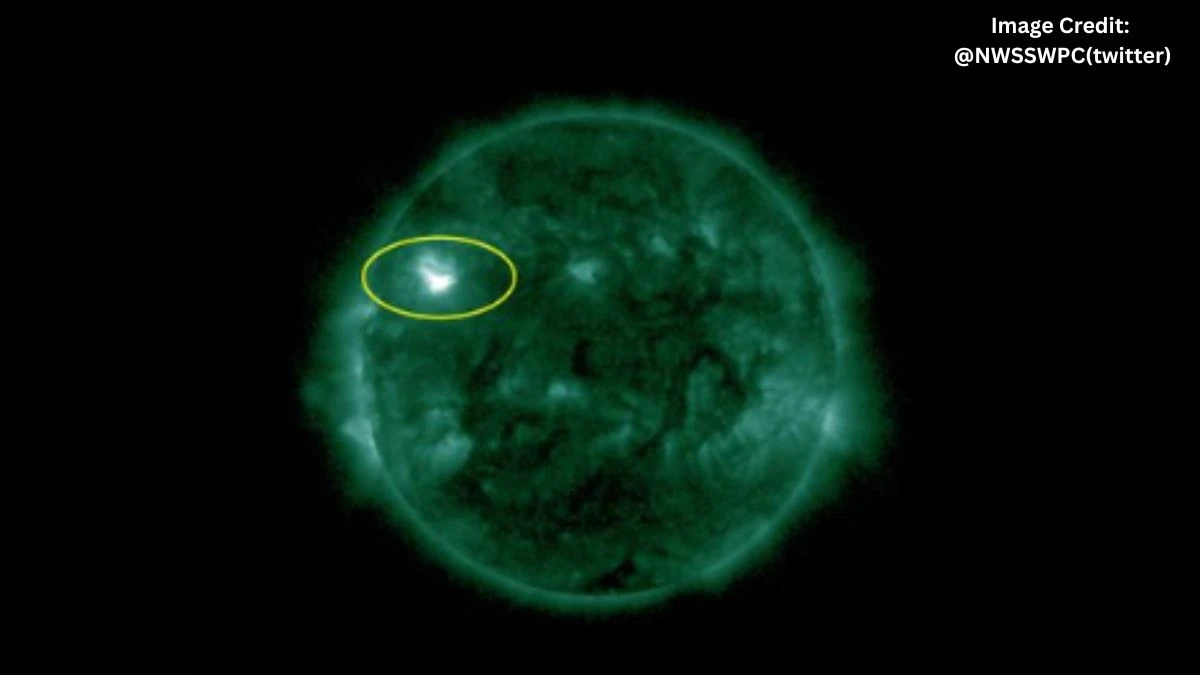

Sun Solar Flares
Sun solar flares are intense bursts of energy from the Sun that can temporarily mess with Earth’s technology, and the past few days have been a textbook example of how dramatic they can get.
Since 1 February 2026, an unusually hyperactive sunspot region has been firing off multiple powerful flares, some of them ranked among the strongest seen in the past few decades. It sounds like sci‑fi, but the impact is very down-to-earth: radio blackouts, GPS glitches, extra stress on satellites and, if things escalate, pressure on power grids.
There is no direct threat to people on the ground, and that’s worth underlining because “angry Sun” headlines can sound scarier than the actual risk.
Still, for a world that now runs on navigation, communication and always‑on internet, this kind of solar storm is not just a space story; it’s an infrastructure story.
What Exactly is a Sun Solar Flare?
A sun solar flare is a sudden explosion of energy on the Sun’s surface, triggered when twisted magnetic fields in an active region snap and reconnect.
In a matter of minutes, huge amounts of radiation are hurled into space across the entire electromagnetic spectrum, from radio waves to X‑rays. Earth’s atmosphere blocks the harmful parts from reaching the ground, but the upper layers – especially the ionosphere – respond quickly, and that’s where technology starts to feel the heat.
Space agencies use a simple classification system: C, M and X‑class flares, with X being the most intense, and a number (like X1.5 or X8.1) to indicate how strong within that category.
When an X‑class flare is reported, satellite operators, aviation authorities and power grid managers tend to sit up a bit straighter in their chairs.
What Changed Since February 1, 2026?
Since February 1, 2026, the Sun has been firing off a sustained series of strong solar flares, including some in the most powerful X-class category.
An especially intense X8.1 flare late on February 1 has been flagged as the strongest flare of 2026 so far and one of the top events since continuous satellite monitoring began in the mid‑1990s.
These eruptions are coming from a magnetically complex sunspot group known as Active Region 14366, which solar physicists describe as “hyperactive” and “supercharged.”
It has already produced multiple major flares in just a few days, and with the Sun near the peak of its 11‑year solar cycle, experts expect elevated activity to continue through 2026 rather than calm down overnight.
Why is India and ISRO so Alert?
India is on high alert because these solar flares can directly affect over 50 active Indian satellites that support communication, TV, navigation, weather and defense.
ISRO has already issued alerts to its ground stations and put mission control in a heightened readiness mode, with teams prepared to respond quickly if any satellite shows signs of trouble.
Anil Kumar, Director of ISTRAC, has publicly warned of a strong possibility of radio blackouts, making it clear that this is not a routine week in the control room.
Behind the scenes, operators may tweak satellite orientations, adjust operations, or temporarily power down sensitive instruments – small, deliberate moves that can be the difference between a brief hiccup and a serious anomaly.
There is a quieter success story in the middle of this: India’s Aditya‑L1 solar observatory, sitting about 1.5 million km away at the Sun–Earth L1 point, is now feeding real‑time data that helps ISRO anticipate the intensity and timing of these disturbances.
It is the kind of mission that sounds niche until a week like this arrives and suddenly becomes headline‑level “national resilience” infrastructure.
How Serious is the Risk for People on Earth?
For people on the ground, even these powerful flares are not expected to cause direct physical harm, thanks to Earth’s magnetic field and atmosphere.
The bigger concern is that critical systems that modern life quietly depends on, from GPS timing in financial networks to communication links in remote regions, can experience glitches, outages, or reduced accuracy.
In higher latitudes and along polar flight routes, strong solar activity can force airlines to reroute or adjust communications because the ionosphere becomes too disturbed for reliable radio links.
Satellites face increased radiation exposure, which can cause bit flips in electronics or, in extreme cases, temporary loss of control if operators are caught unprepared.
On the more visually pleasing side, such storms can also drive intense auroras, though for most of India, this remains more a social‑media curiosity than a nightly sky show.
What Happened in the Last 24–72 Hours?
Over the last few days, the Sun has unleashed a cluster of very strong flares, including some of the most powerful of Solar Cycle 25 so far.
A magnetically complex sunspot region, known as Active Region 14366, has produced multiple major events – among them an X8.1 flare late on 1 February 2026, flagged by Indian and international space weather teams as a “severe” event.
NASA confirmed a strong X4.2 flare that peaked at 7:13 a.m. ET on 4 February 2026, captured in detail by the Solar Dynamics Observatory, adding to a week-long run of energetic outbursts.
@NASASpaceAlerts shared on X that the Sun released a powerful X4.2-class solar flare on February 4, peaking at 7:13 a.m. ET, as captured by NASA’s Solar Dynamics Observatory.
Earlier in the week, another flare was classified around X1.5, showing that the region is not just active, but persistently firing. In practical terms, this has meant periods of high‑frequency radio disruption and elevated risk for satellites – the kind of week where space weather forecasters definitely do not sleep in.
There is also a slightly unnerving milestone: monitoring centres report these recent flares rank among the top ~20 strongest since continuous satellite observations began in 1996. That does not mean “doomsday”, but it does mean “pay attention.”
How are Aditya‑L1 and Other Missions Helping?
India’s Aditya‑L1 mission is acting like an early‑warning post in space, parked about 1.5 million kilometres from Earth at the Sun–Earth L1 point.
From this vantage, its instruments monitor solar radiation, magnetic fields, and energetic particles, giving Indian scientists precious lead time before disturbances reach satellites and ground infrastructure.
Data from Aditya‑L1, along with NASA and NOAA satellites, feeds into space‑weather models that guide decisions such as delaying satellite manoeuvres or issuing advisories to power grid operators.
India is also planning the National Large Solar Telescope in Ladakh to study solar magnetic fields in high detail, a project that underlines how protecting technology from the “angry Sun” is now as much about national resilience as it is about pure science.
What Should People and Businesses Actually Do?
For most individuals, the best step is simple: stay informed through official space‑weather and power‑grid updates, particularly when news mentions “strong radio blackout” conditions or “severe” solar alerts.
Technology‑reliant sectors aviation, satellite communication, navigation services, and critical infrastructure operators, benefit from having backup communication channels, tested contingency procedures, and awareness of current solar‑flare forecasts.
In practice, that might mean planning for short‑term GPS inaccuracy, scheduling non‑essential satellite tasks away from peak solar disturbance periods, and accepting that a dropped signal now and then could be caused not by faulty hardware, but by the star at the centre of the solar system having an exceptionally restless week.
Disclaimer
This article is for general informational and educational purposes only and should not be treated as technical, operational, financial, or emergency advice. Space‑weather conditions change rapidly; readers should always verify current alerts and guidelines from official agencies like ISRO, NASA, and national disaster or power‑grid authorities.