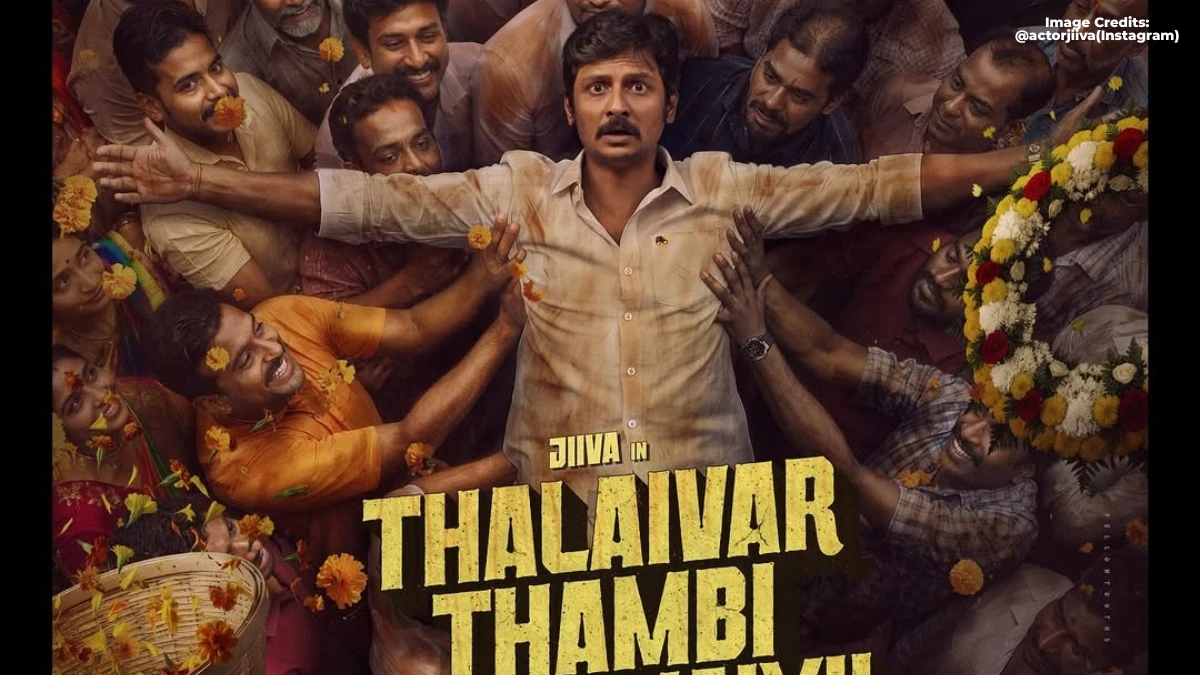

Thalaivar Thambi Thalaimaiyil Box Office Collection Day 26
Thalaivar Thambi Thalaimaiyil is estimated to collect around ₹0.02 crore net in India on Day 26, a quiet but expected number for a film that has almost finished its theatrical run.
By this stage, most shows are pushed to odd timings, screens are being handed over to newer releases, and yet there’s that small cluster of audiences still showing up, with tickets, popcorn, and a bit of loyalty to Jiiva’s name.
The film had a festive Pongal launch, ran strong through the holiday period, and then eased into a gentle landing over the last week or so, which is exactly what a word‑of‑mouth rural comedy usually does.
If someone walks into a late evening show on Day 26, the hall may not be packed, but there’s a peculiar charm to that experience: half the crowd already knows the punchlines and laughs in advance, the other half is discovering the political digs for the first time and reacting loudly.
A few trade watchers would simply call it “end‑of‑run numbers”; for regular viewers, it’s just a relaxed, bargain‑ticket watch before the film moves permanently to living rooms via OTT.
Thalaivar Thambi Thalaimaiyil Overall Box Office Collection
Thalaivar Thambi Thalaimaiyil has earned roughly ₹29.89 crore in India net, with India gross around ₹35.24 crore and worldwide gross in the ₹38.44–40.02 crore range, against a modest budget of about ₹10 crore.
That kind of 200%+ return on investment is the kind of story small and mid‑scale Tamil films dream of when they grab a Pongal slot alongside bigger, noisier titles.
The film took off well in its first eight‑day stretch, touching nearly ₹19.75 crore in Week 1 thanks to the holiday boost, family crowds, and the basic promise of “village comedy with some political spice.”
Week 2 brought a predictable softening but still a decent ₹7.3 crore‑plus, which means the drop was controlled and the reports from the ground were friendly, not brutal.
By the time it crawled into the fourth weekend, the numbers had naturally thinned—Day 23 around ₹0.08 crore, Day 24–25 in the ₹0.13–0.15 crore band, and then that tiny ₹0.02 crore on Day 26 that still counts because it shows the film didn’t collapse; it tapered.
Somewhere in all this, multiplex trades and single‑screen owners quietly tagged it as a “Super Hit,” not in the social‑media sense, but in that old‑school, spreadsheet‑approved way.
For a film that reportedly cost around ₹10 crore to mount, these figures translate to a very healthy profit once you factor in satellite and digital rights, especially with a Netflix premiere lined up for February 12, 2026.
Theatrical revenues effectively did the heavy lifting, and now OTT will extend its life. Those who skipped it in theatres might stumble on it one night, watch “just 10 minutes,” and end up finishing the whole thing.
Thalaivar Thambi Thalaimaiyil Cast
-
Jiiva as Jeevarathnam / Jeeva Rathnam
-
Thambi Ramaiah as Mani
-
Ilavarasu as Ilavarasu
-
Prathana Nathan as Sowmya / Sowmiya
-
Sai Vignesh as Benny
-
Amith Mohan Rajeshwari as Rasu / Raasu
-
Anuraj O.B. as Sowmya’s lover / Paal Raasu (also writer)
-
Jenson/Jensan Diwakar as Thavidu
-
Sarjin Kumar as Kanniyappan’s brother
-
Rajesh Pandian as Akhil
-
Subash Kannan as Kanniyappan
-
Surjith Gopinath as Mani’s father’s brother
-
Maala Parvathi as Jeevarathnam’s mother
-
Shabana Shajahan (Shabanaa Shahjahan) as Jeeva’s bride/fiancée (cameo)
-
Meenakshi Dinesh – cameo in the song “Kalakalappa
Thalaivar Thambi Thalaimaiyil Plot
Thalaivar Thambi Thalaimaiyil follows Jeevarathnam, a panchayat president in a Tamil village, who finds himself stuck between a wedding and a funeral that are stubbornly scheduled for the same time right next to each other.
A joyful wedding is underway at Ilavarasu’s house; next door, Mani’s aged father passes away, and Mani insists that the funeral ritual take place at the exact same hour as the wedding muhurtham.
Old grudges between the two families flare up, and what should have been a sad‑meets‑happy coincidence turns into a full‑blown ego war.
From there, the film builds a kind of pressure‑cooker comedy: relatives take sides, villagers start whispering, and local political players spot an opportunity to poke, divide, and gain mileage from the chaos.
Jeevarathnam, hoping to retain his chair and keep the village calm, keeps negotiating, pleading, manipulating schedules, and trying every trick he knows to stop the situation from exploding.
The humour comes not just from slapstick, but from how familiar these arguments feel, the way elders refuse to bend, how rituals become excuses for one‑upmanship, and how politics casually slides into family matters.
Underneath the jokes, the story quietly talks about power, pride, and the cost of refusing to compromise even when everyone around you suffers for it.
It is not a heavy, message‑driven film, though; the tone stays light, with warm moments between villagers, romantic beats around the wedding, and sharp little political satirical punches scattered through the dialogue.
By the time the climax arrives, the question isn’t only “Which event wins?” but also “What did this fight really achieve for anyone?”, and that’s where the film tries to land an emotional, slightly reflective note without losing its smile.
Disclaimer:
Box office figures mentioned above are based on publicly available trade reports, industry estimates, and media sources. These numbers are approximate and may vary as final audited collections are not officially disclosed by the makers. Viewers are advised to treat the figures as indicative rather than exact totals.