
What Happened to Turning Point USA’s Halftime Show?
Turning Point USA went ahead with its “All-American Halftime Show” as a political and cultural counter to the official Super Bowl LX halftime headlined by Bad Bunny on Sunday, February 8, 2026, during the Super Bowl broadcast from New Orleans.
Instead of airing on traditional TV like NBC, the conservative group streamed the show primarily on YouTube and other digital platforms, framing it as a patriotic alternative focused on “faith, family, and freedom” rather than a typical pop spectacle.
The event had been teased for months after initial rumors, advertiser nerves, and even earlier talk that NBC would not carry a rival show, which pushed the project firmly into the online-only space.
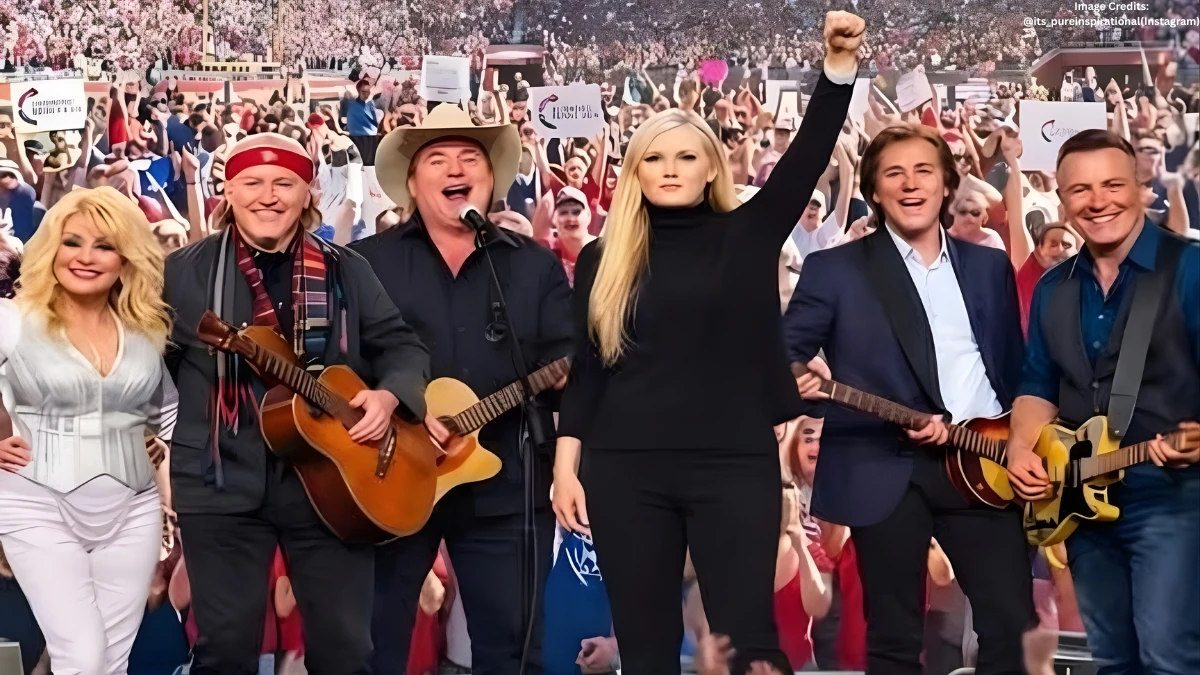
The show itself mixed concert energy with political signaling: Kid Rock headlined, joined by country names such as Lee Brice, Gabby Barrett, and Brantley Gilbert, and the production leaned into American flag imagery, live guitar versions of the national anthem, and on-screen patriotic messages.
At times, the pacing felt uneven, with worship-style ballads and tributes breaking up the louder rock moments, creating an experience that some viewers praised as heartfelt and others described as dragged-out or low-budget compared with the NFL stage.
The program also included a tribute segment to Turning Point’s late founder Charlie Kirk, turning what might have been a straightforward concert into a memorial-tinged, culture-war broadcast that blended entertainment, politics, and movement branding.
Did the TPUSA Halftime Show Get Canceled?
The Turning Point USA halftime show was not canceled; it faced cancellation rumors throughout late 2025 but ultimately took place as planned during Super Bowl LX.
Speculation started when reports suggested NBC had dropped the idea of airing an “All-American Halftime Show” on its network due to advertiser concerns and the risk of politicizing the main broadcast, which led some to assume the event itself was dead.
Social media posts then amplified claims that Turning Point USA was considering pulling the plug because of “low interest” or difficulty securing a big enough right-wing headliner, but fact-checkers and the organization’s continued promotion contradicted those viral narratives.
Instead of disappearing, the project shifted fully into a streaming model, with Turning Point pushing viewers to YouTube and social channels rather than relying on traditional TV carriage.
This move aligned with how a lot of political and niche entertainment content now lives online, where audiences can be targeted directly and sponsors have more control over association and messaging.
For many viewers who had seen only the rumors, the event’s actual launch felt less like a grand TV takeover and more like a large-scale online rally happening in parallel to the official halftime show.
How Many People Watched TPUSA’s Halftime Show?
Turning Point USA’s “All-American Halftime Show” drew an audience in the millions, though still far below the NFL’s official halftime reach.
Early figures show more than 4.8–5 million live views across platforms, primarily via the YouTube livestream. For a politically branded, online-only counterprogramming effort, that is a sizable turnout, especially given that the main Super Bowl broadcast and Bad Bunny’s halftime performance commanded a far larger global TV audience.
The viewership was helped by a clear marketing hook: a conservative alternative for fans who felt disconnected from recent NFL halftime choices, especially the decision to feature Bad Bunny.
Clips of Kid Rock’s performance, patriotic visuals, and the Charlie Kirk tribute began circulating quickly on conservative media and social platforms, extending the show’s reach beyond the live numbers.
At the same time, mainstream and entertainment outlets covered the event more as a cultural curiosity than a direct competitor, often highlighting production flaws, awkward pacing, and ideological overtones.
Why Did the Turning Point USA Halftime Show Spark Controversy?
The Turning Point USA halftime show sparked controversy because it framed itself as an explicitly ideological alternative, and the content leaned heavily into culture-war themes rather than remaining just a sports entertainment break.
Promotional language emphasized “real America,” faith-centered performances, and pushback against perceived “wokeness,” which critics interpreted as exclusionary and inflammatory, especially when set against Bad Bunny’s broad mainstream appeal and international fan base.
Some observers described segments of the show as xenophobic or overly politicized, pointing to the contrast between patriotic imagery and rhetoric that seemed aimed at reinforcing in-group identities rather than unifying a general football audience.
Others, particularly in conservative circles, framed the program as a needed space where viewers could see values like Christianity, traditional family roles, and nationalist symbolism elevated during one of the biggest pop culture moments of the year.
This split reaction turned the TPUSA halftime show into less of a neutral entertainment product and more of a statement about who the Super Bowl stage is “for,” intensifying debates that had already been brewing since Bad Bunny was announced.
What Does This Mean Going Forward for Halftime Shows?
The Turning Point USA halftime show shows how future halftime moments might increasingly split into multiple, highly targeted experiences rather than one unifying performance.
With streaming making it easy to run parallel events, groups with strong ideological or cultural identities can program their own “halftime” tailored to specific audiences, even as the main NFL show keeps chasing global star power and broad demographics.
For sports fans, this trend could mean more choice but also more fragmentation, where even a break in the middle of a game becomes a signal of identity and politics instead of just music and spectacle.
Brands and broadcasters will likely keep weighing the risk: aligning with a niche alternative can energize a core base but may alienate other viewers and advertisers wary of controversy.
At the same time, the mixed reviews of TPUSA’s production quality and pacing hint that audience expectations, shaped by decades of big-budget NFL halftime shows, remain high no matter the ideology behind the stage.
Disclaimer: This is for general information and news analysis only and should not be taken as legal, financial, or professional advice. Viewers are encouraged to cross-check details with official Super Bowl and event organizers.