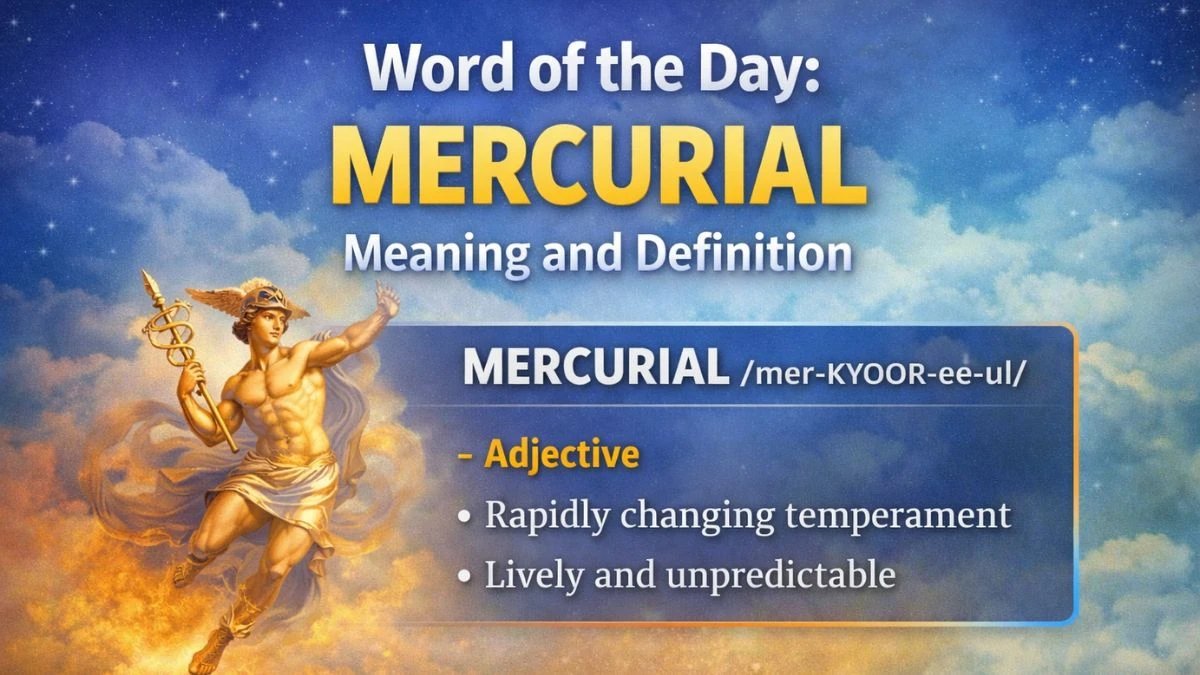

The word mercurial often pops up when describing people, moods, or situations that seem impossible to pin down. It’s especially relevant in conversations about personality, markets, or even weather—anywhere rapid change feels like the norm. At its core, mercurial captures the idea of constant movement and unpredictability.
Mercurial - Origin of the Word
Mercurial traces its roots to Mercury, the Roman messenger god known for speed, agility, and changeability. The term entered English in the late Middle Ages through Latin mercurialis, meaning “of Mercury.” Historically, it was also linked to the planet Mercury and the element mercury (quicksilver), both associated with swift motion and instability. Over time, the word evolved from astrological and scientific contexts into a broader metaphor for human behavior and shifting conditions.
Mercurial - Meaning and Definition
Mercurial (adjective): subject to sudden or unpredictable changes, especially in mood, behavior, or conditions.
It’s commonly used to describe people whose emotions shift quickly, but it can also apply to markets, politics, or creative processes. While often neutral, it can carry either admiration (lively, dynamic) or criticism (unstable, erratic), depending on context.
Mercurial - Synonyms
- Unpredictable – difficult to foresee or anticipate outcomes.
- Changeable – likely to alter frequently over time.
- Volatile – prone to rapid and extreme change, often used for markets or emotions.
- Erratic – lacking consistency or a steady pattern.
- Capricious – changing suddenly without clear reason.
- Fickle – frequently changing loyalties or preferences.
Mercurial - Antonyms
- Stable – steady and resistant to sudden change.
- Consistent – behaving in the same reliable way over time.
- Steady – calm, controlled, and predictable.
- Constant – remaining unchanged or dependable.
Usage in a Sentence
Her mercurial mood kept the entire team alert, never quite sure whether the meeting would begin with praise or sharp criticism.