
The word rankle captures a feeling most people recognize instantly — that small irritation or resentment that refuses to fade away. It’s often used to describe emotions that linger quietly, growing more uncomfortable over time rather than disappearing.
Rankle - Origin of the Word
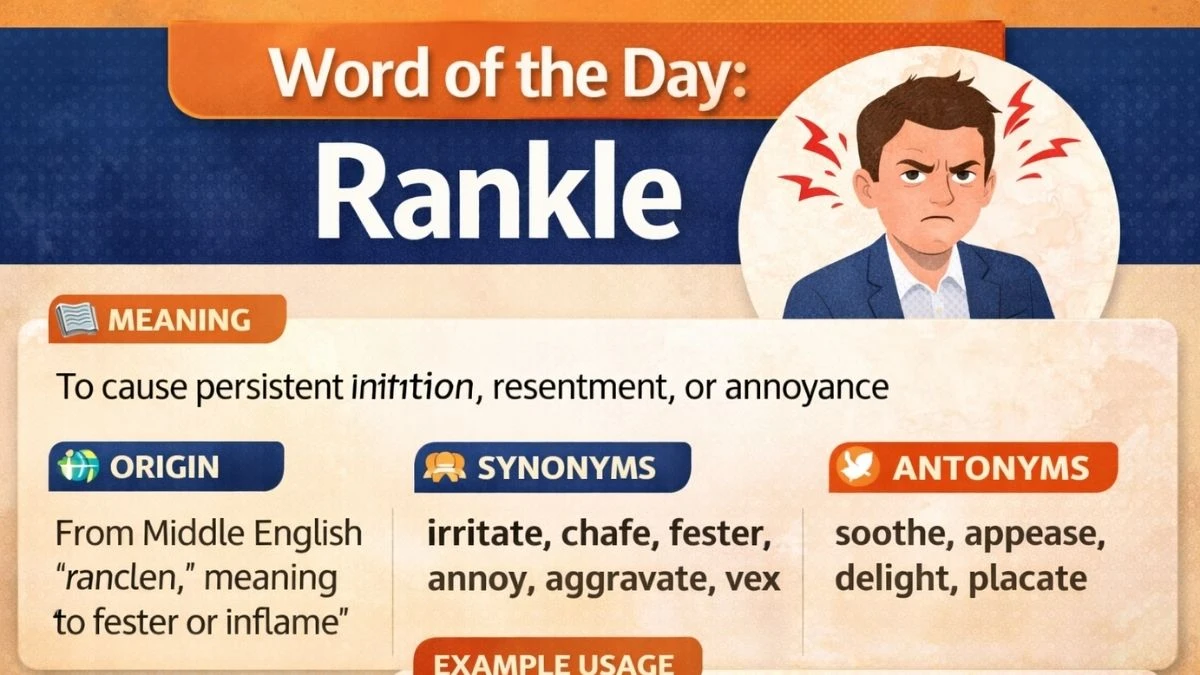
Rankle comes from the Middle English word ranclen, meaning “to fester” or “to become inflamed.” Its roots trace back to Old French rancler, which referred to a wound that would not heal properly. Over time, the word evolved from describing physical irritation to emotional and psychological discomfort, making it especially useful in modern language when talking about unresolved feelings.
Rankle - Meaning and Definition
To rankle means to cause persistent irritation, resentment, or annoyance, especially because of a perceived insult, unfairness, or unresolved issue. Unlike brief anger, something that rankles tends to stay in the background, resurfacing repeatedly. It is most commonly used with emotions, memories, or remarks that continue to bother someone long after the event has passed.
Rankle - Synonyms
- Irritate – to provoke mild but ongoing annoyance.
- Chafe – suggests friction, often emotional or situational.
- Fester – implies resentment growing worse over time.
- Annoy – a general term for causing displeasure.
- Aggravate – to intensify irritation or frustration.
- Vex – to trouble or distress mentally.
Rankle - Antonyms
- Soothe – to calm or ease discomfort.
- Appease – to reduce anger or resentment.
- Delight – to bring pleasure instead of irritation.
- Placate – to make someone less angry.
Usage in a Sentence
The unfair comment continued to rankle her, even days after the meeting had ended.
Understanding rankle helps express subtle, lingering emotions with precision — making it a powerful word for both everyday conversation and thoughtful writing.