Find the 3 Differences in 10 Seconds in This Park Picture: Challenge Your Observation Skills!
Are you ready to test your visual acuity and sharpness? This "Spot the Difference" puzzle will challenge you to spot three subtle differences hidden in a colorful park scene. The images may look nearly identical at first glance, but there's more than meets the eye. Your goal: find the three differences in just 10 seconds. Ready, set, go!
Puzzle Overview: A Fun Day in the Park
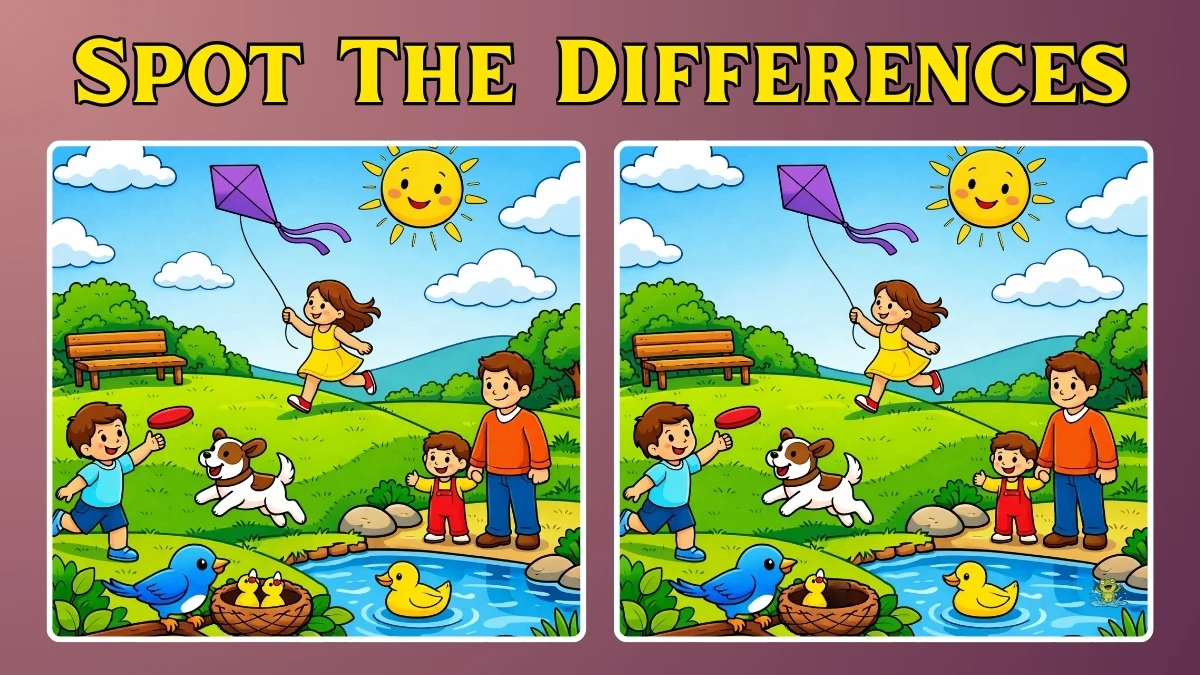
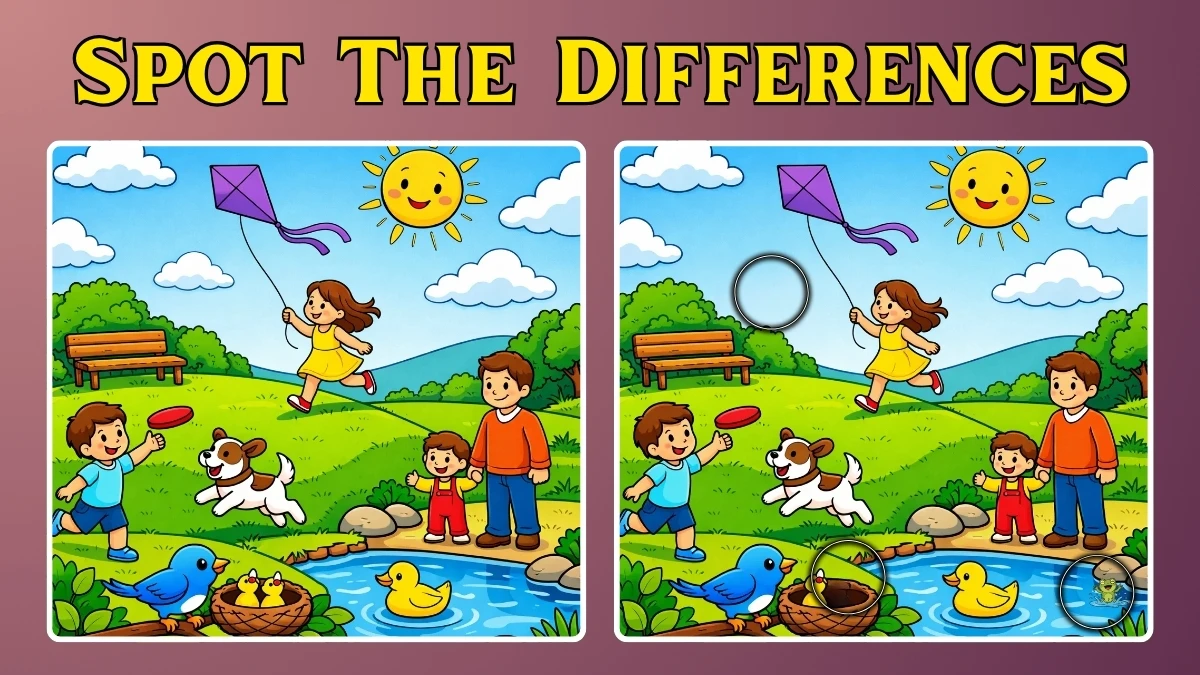
The puzzle features a delightful park scene with a family enjoying the outdoors. A child is playing fetch with a dog, another child is joyfully running with a kite, and the entire scene is filled with vibrant greenery, animals, and a peaceful pond. At first glance, the two images seem to be the same, but upon closer inspection, you’ll notice the hidden differences.
This type of puzzle is not only fun but also excellent for improving concentration and observational skills. Whether you are a puzzle enthusiast, someone looking to sharpen your brain, or just in need of a fun activity to do in your free time, this puzzle will entertain you and provide a little mental exercise too.
Can You Spot the 3 Differences?
Now, before you jump into the answer key, take a moment to study both images carefully. The differences are subtle, and it takes sharp attention to detail to find them within the given time. Here’s a breakdown of the puzzle before we reveal the answers:
- Scene Description: The image shows a family spending time outdoors in a beautiful park. We see a bright, sunny sky, a pond with ducks, children playing, and a couple of animals in the scene.
- Difficulty: Medium to challenging. While the changes are not extremely difficult to find, you’ll need a keen eye and quick reflexes to spot them in 10 seconds.
Hint: Look for the Small Details!
If you need a little help, here are some tips to guide you as you search for the differences:
- Focus on the sky and clouds – sometimes, even the smallest change in the sky can be crucial.
- Pay attention to the animals and their positions. They might not be in the same spot or have the same features.
- Observe the objects in the background carefully – parks are full of details, and even tiny differences can make a big impact.
Spot the Differences Puzzle (With Timer!)
Your challenge: Find the 3 differences in the above image within 10 seconds. Can you do it?
The 3 Hidden Differences: Can You Find Them All?
Did you find the differences in the 10 seconds? If not, it’s okay! Here’s a detailed answer key with a description of the three differences that you might have missed:
1. Missing Cloud
In the image on the right, the fluffy cloud in the top-left corner of the sky is missing. This subtle difference is one of the first things to notice once you start focusing on the sky. The image on the left has a cloud in that spot, but it has disappeared in the right version.
2. Frog in the Pond
If you take a closer look at the pond in the lower left corner, you’ll see that the frog has disappeared. In the left image, there is a small frog sitting on a rock near the pond, but it’s nowhere to be found in the right image. This small change adds a little mystery to the scene and requires a detailed look at the pond’s edge.
3. Bird in the Nest
Another subtle difference involves the bird in the nest. If you look near the pond on the right side of the image, you’ll notice a nest with a bird sitting on it in the left picture. However, the bird is missing from the nest in the right image. This change requires a careful eye, especially when focusing on the smaller details like the bird’s position.
Why Spot-the-Difference Puzzles Are Great for Your Brain
You might be wondering why you should spend time doing puzzles like these. Well, here are some reasons why spot-the-difference puzzles are more than just fun—they also offer numerous cognitive benefits:
1. Improves Focus
Spot-the-difference puzzles require careful attention to detail. The more you practice these puzzles, the better you’ll get at focusing on even the tiniest discrepancies in any given image or scenario.
2. Enhances Visual Perception
Puzzles like these help improve your visual perception, which is the ability to notice and interpret visual details around you. As you practice spotting differences, your ability to notice subtle changes in real life also improves.
3. Boosts Memory
These puzzles challenge your memory. You’re not just identifying differences—you’re also recalling details from one image to the next. This mental exercise helps keep your memory sharp and active.
4. Relieves Stress
Focusing on a fun, non-competitive activity like a puzzle can help relieve stress and anxiety. It allows your brain to take a break from other pressures and engage in a relaxing, mindful activity.