Optical Illusion
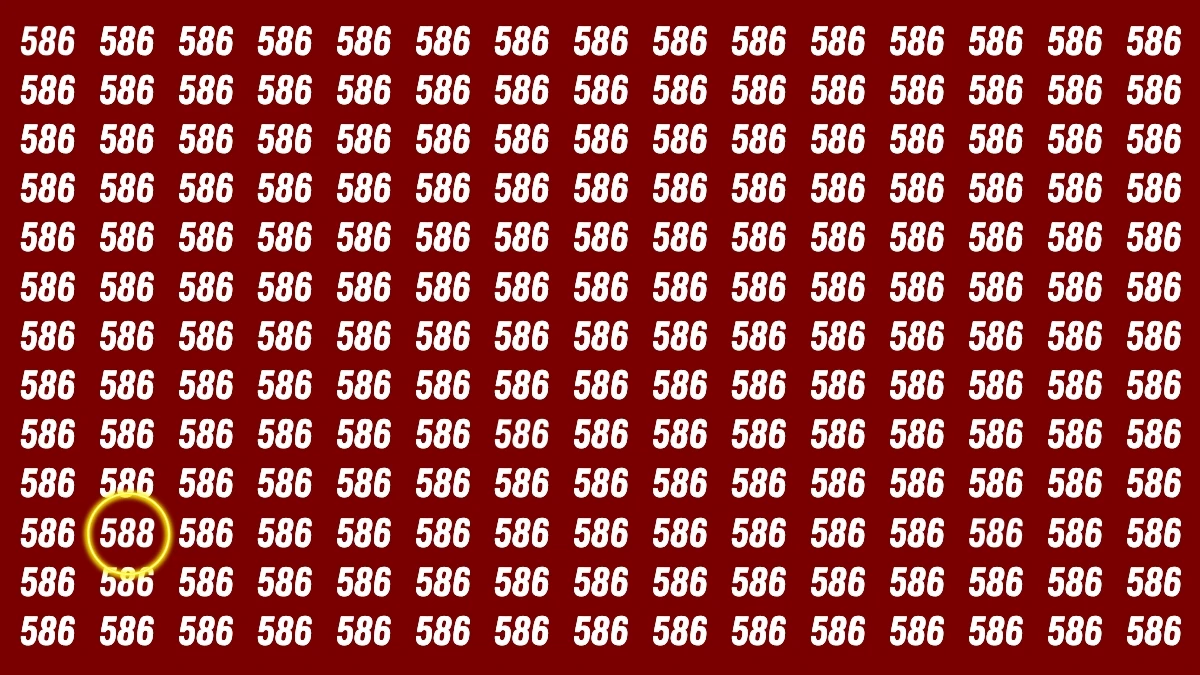
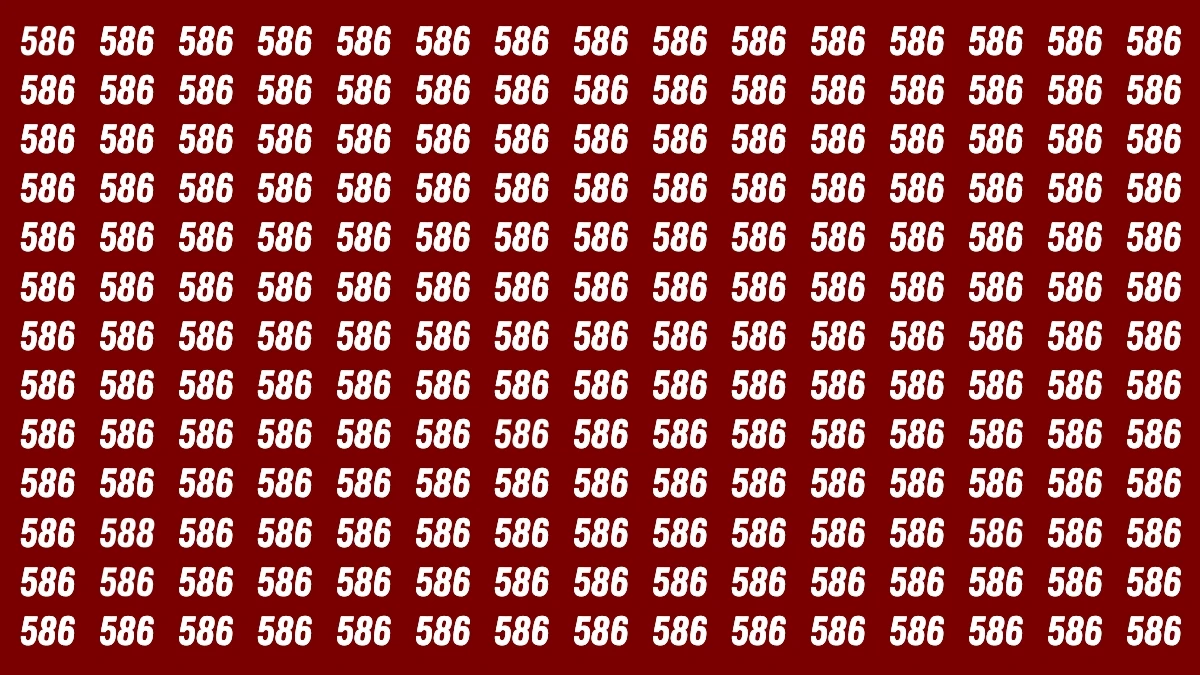
Get ready to put your observation skills to the ultimate test with this exciting optical illusion challenge. At first glance, the image looks like a simple pattern of numbers, but hidden within it is a sneaky “588” waiting to be discovered.
You have just 8 seconds to scan, focus, and spot the difference do you have the sharp “eagle eyes” it takes to beat the clock? Dive in and find out how quick and precise your visual perception really is.
Optical Illusion 8 Seconds Challenge: Only People with Eagle Eyes Can spot the Number 588
This optical illusion challenge is designed to test how quickly your brain can process visual information and spot subtle differences under time pressure. At first glance, the grid of numbers appears uniform, which encourages your eyes to scan in a predictable pattern.
This “visual expectation” can actually slow you down, because your brain assumes everything looks the same and may skip over the one element that is different.
The hidden “588” blends into the surrounding numbers through similar shapes, spacing, and alignment, making it harder to detect at a quick look.
To improve your chances, try breaking the image into smaller sections and scanning row by row instead of looking at the whole picture at once.
This method reduces mental overload and helps your brain focus on identifying unusual patterns. These kinds of puzzles are not just fun they also help sharpen concentration, improve attention to detail, and train your mind to stay alert under pressure.
Optical Illusion 8 Seconds Challenge: Only People with Eagle Eyes Can spot the Number 588 - Solution
If you managed to spot the hidden 588, well done your observation skills are sharper than most. The correct location of the number 588 is in the third row from the bottom and the second column from the left side of the grid.
At first glance, all the numbers appear identical as “586,” which tricks your brain into scanning quickly without fully processing each digit. The subtle change from 586 to 588 is easy to miss because the shapes of the numbers are visually similar, especially when repeated in a uniform pattern.
This illusion works by creating visual fatigue, where your eyes start grouping numbers instead of reading them individually. A helpful strategy is to slow down and scan in a structured way, such as moving column by column or focusing on just one digit at a time. D
oing this helps break the pattern and makes the hidden number stand out more clearly.