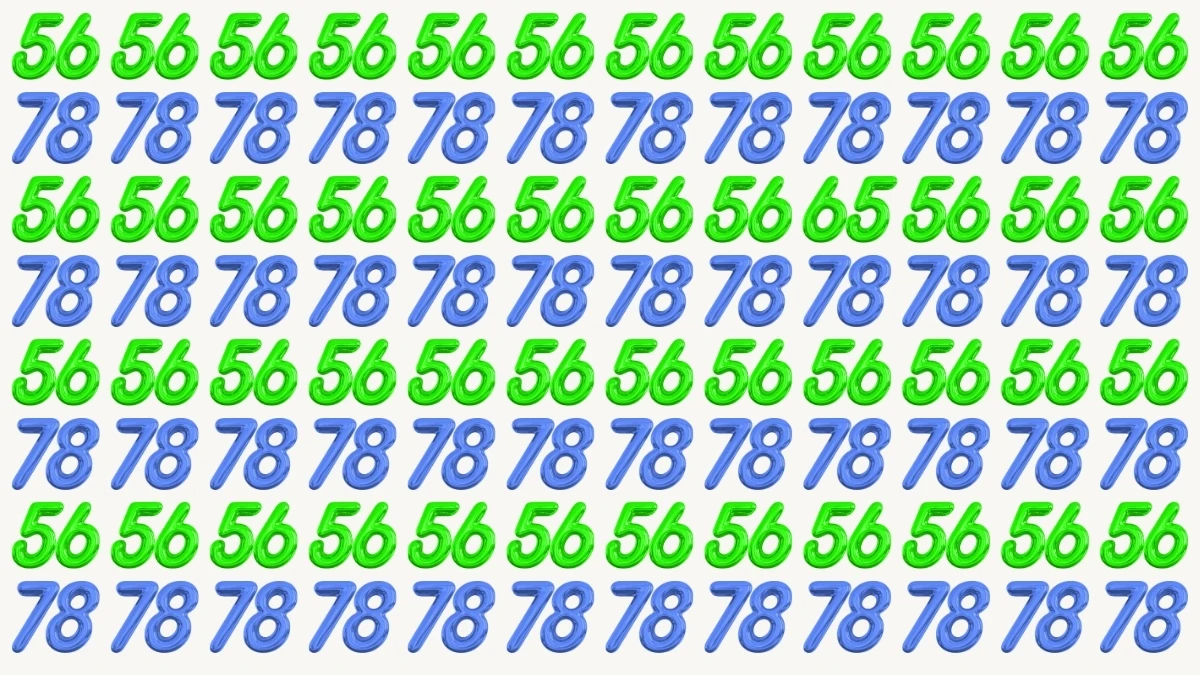

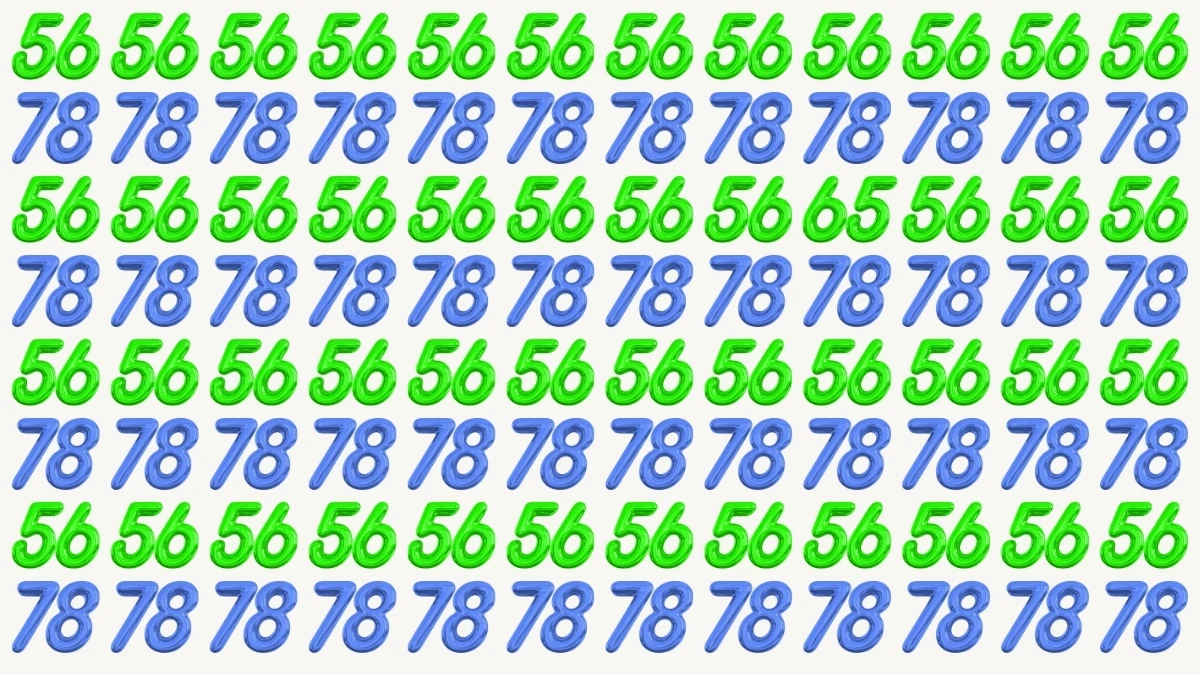
At first glance, this image looks like a neat, repetitive grid of numbers. Rows of 56 in green alternate with rows of 78 in blue, creating a rhythmic, almost soothing pattern. Nothing appears out of place. And that sense of order is exactly what makes this optical illusion surprisingly tricky.
Hidden somewhere in this sea of familiar digits is a single 65. Your challenge is simple: find it within 8 seconds—without zooming, without guessing, and without jumping randomly across the image.
Why Your Eyes Glide Past the Odd Number
Most people approach this puzzle by scanning quickly for something “different.” The problem is that 65 shares visual traits with both 56 and 78. The curves feel familiar. The thickness matches. The color blends in.
Your brain does something clever—but unhelpful here. It groups similar shapes together and labels them as identical, allowing you to process the image faster. This shortcut works in daily life, but in puzzles like this, it hides the answer in plain sight.
Instead of looking for a new number, try noticing digit order.
The Clear Solution: Where the Number 65 Is Hidden
Here’s the honest reveal—no delay, no frustration.
The 65 appears in a green row of 56s, positioned slightly right of center. The digits are reversed compared to the surrounding 56s, but because the font style and color remain consistent, the difference doesn’t stand out immediately.
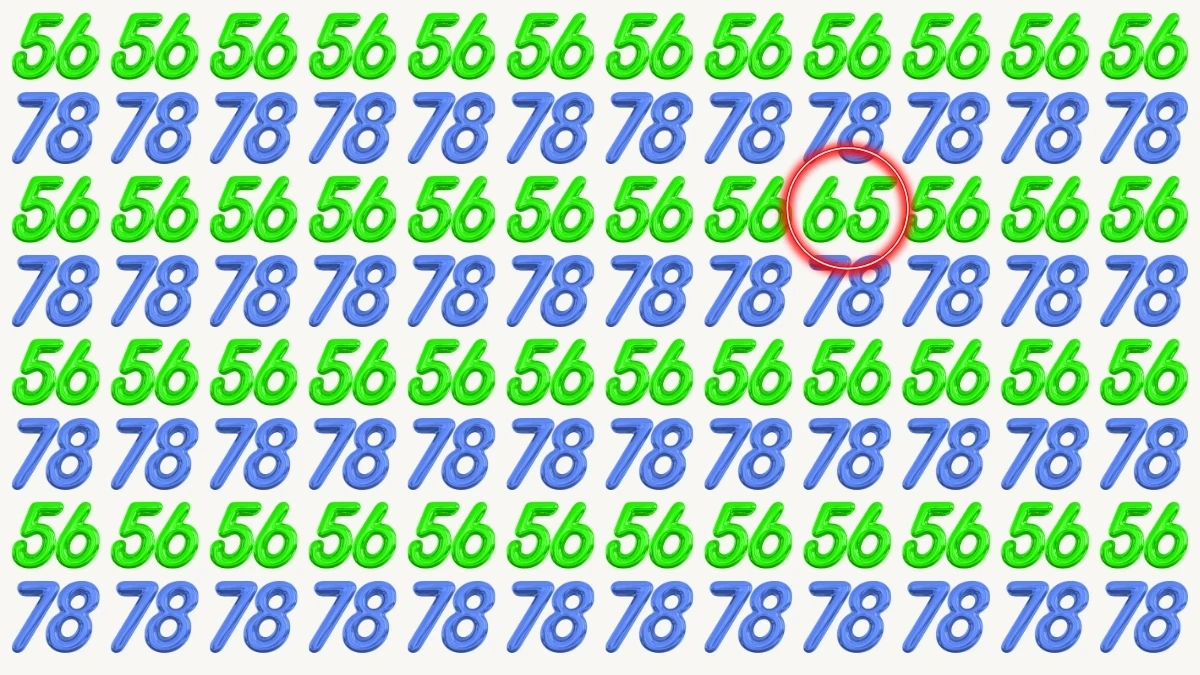
Once you see it, your eyes lock onto it instantly.
Why This Optical Illusion Works So Effectively
This puzzle relies on pattern dominance and orientation bias.
Here’s what’s happening in your brain:
- Repetition creates a visual rhythm
- The brain expects consistency
- Familiar shapes override digit accuracy
- Small reversals go unnoticed at first
Because 65 uses the same digits as 56, your brain assumes it belongs—even though the order is wrong.
That’s why slowing down helps. The illusion isn’t about eyesight. It’s about how efficiently your brain processes patterns.
A Smarter Way to Spot Hidden Numbers Faster
If you enjoy number-based optical illusions, try this approach next time:
- Compare digit order, not shape
- Scan one row at a time
- Pause briefly between rows
- Look for rhythm breaks, not color changes
These small habits reduce visual shortcuts and improve accuracy.
This optical illusion isn’t designed to trick you unfairly. It’s built to highlight how easily repetition can guide perception. The number 65 doesn’t hide it blends.
Whether you found it quickly or needed the solution, your brain just practiced something valuable: noticing detail inside order. That’s the real challenge and the real reward.