Optical Illusion Eye Challenge: Can You Spot the Numbers 56 and 95 Among 65 in Just 9 Seconds?
Optical illusion puzzles like this one are designed to quietly test how sharp your visual focus really is. At first glance, the image looks simple—just rows and rows of the number 65 on a bold blue background. But hidden inside this pattern are two intruders: the numbers 56 and 95.
Your challenge is straightforward but tricky: can you find both 56 and 95 within 9 seconds?
Most people spot one quickly and completely miss the other.
The Challenge Image
Take a deep breath, focus your eyes, and scan carefully. Avoid reading each number one by one—this puzzle is all about pattern recognition and visual awareness.
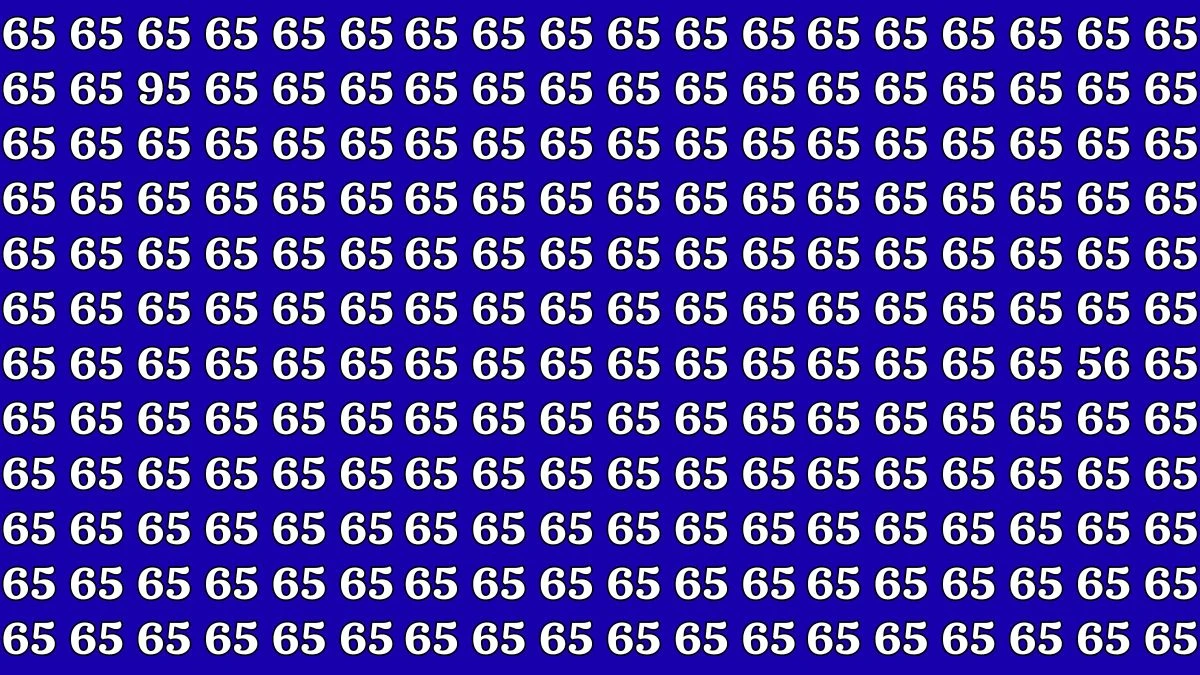
Tip: Your brain gets comfortable once it locks onto the repeated “65” pattern. The moment that happens, it starts auto-filling what it expects to see—making the odd numbers much harder to detect.
Why This Optical Illusion Is So Effective
This puzzle works because of a psychological effect called pattern habituation. When the brain sees the same shape or number repeatedly, it switches to autopilot mode to save mental energy.
In this illusion:
- 95 tricks the eye because the shape still feels close to “65”
- 56 blends in because the digits are familiar but reversed
Your brain assumes sameness—even when it’s wrong.
That’s why time pressure matters. The faster you scan, the more likely your brain is to miss subtle differences.
The Solution: Where Are 56 and 95 Hidden?
If you managed to find both numbers within 9 seconds, congratulations—you have excellent visual discrimination skills. If not, don’t worry. Most viewers need a second look.
Here’s the solution image with both hidden numbers clearly highlighted.
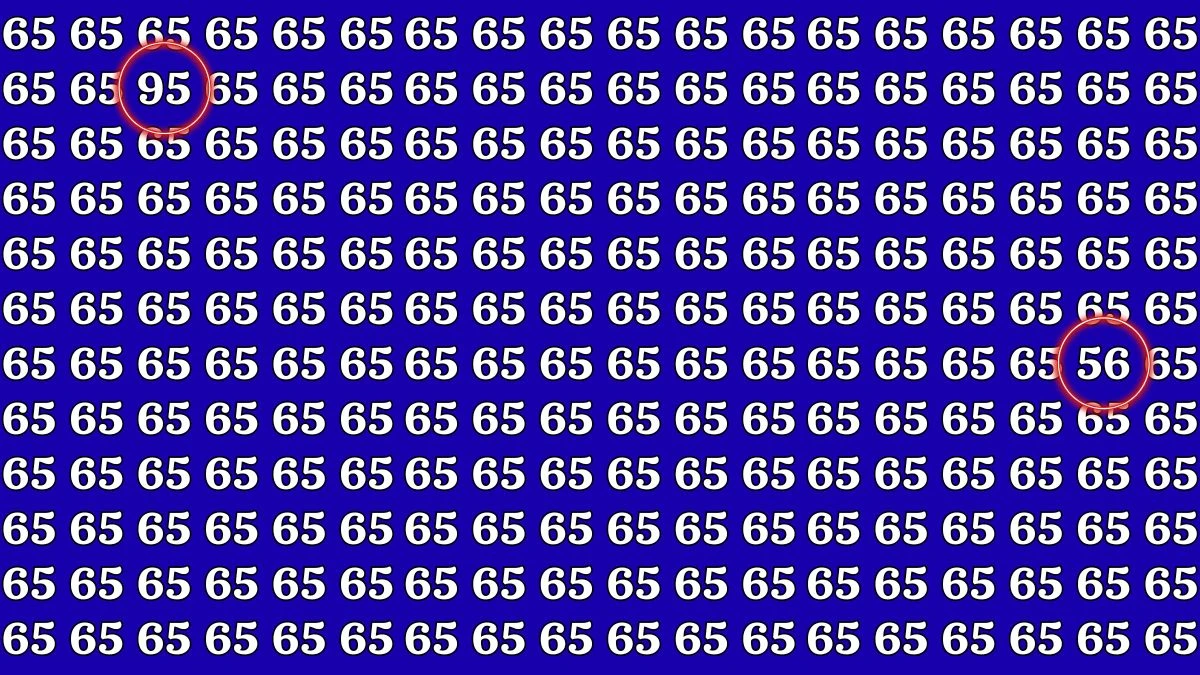
- 95 appears in the upper-left area, slightly offset from the surrounding 65s
- 56 is hidden toward the right side, where your eyes naturally relax after scanning the center
Once you see them, it’s almost impossible to unsee them.
What This Says About Your Brain
Optical illusion challenges like this aren’t just fun—they reveal how your brain processes visual information.
- Fast spotters tend to scan patterns holistically
- Delayed spotters rely more on logical, line-by-line checking
- Both approaches are valid—this puzzle simply favors instinctive visual filtering
That’s why these challenges are often used in cognitive focus exercises and attention training.
Want to Get Better at Spot-the-Difference Illusions?
Here are a few quick tips:
- Don’t read numbers scan shapes
- Shift your focus to corners and edges
- Blink once and re-scan to “reset” your vision
- Look for what feels wrong, not what looks right
With practice, your brain gets better at breaking visual habits.
If this puzzle made you pause, squint, or smile in frustration—that’s exactly the point. Optical illusions remind us that seeing isn’t always believing, and even the simplest patterns can fool the sharpest minds.