Optical Illusion Eye Test: Can You Spot the Inverted 43 among 43 in 7 Seconds?
Optical illusion eye tests are more than just fun puzzles — they quietly test how sharp your focus, pattern recognition, and visual scanning skills really are.
Today’s challenge looks deceptively simple, but it has fooled thousands of sharp-eyed readers.
At first glance, the image below appears to be filled with identical “43” numbers arranged neatly in rows. But hidden somewhere in this grid is one inverted 43 — flipped just enough to confuse your brain.
Your task is simple: Can you spot the inverted 43 in just 7 seconds?
Set a timer, trust your eyes, and don’t scroll too fast.
Optical Illusion Challenge: Find the Inverted 43
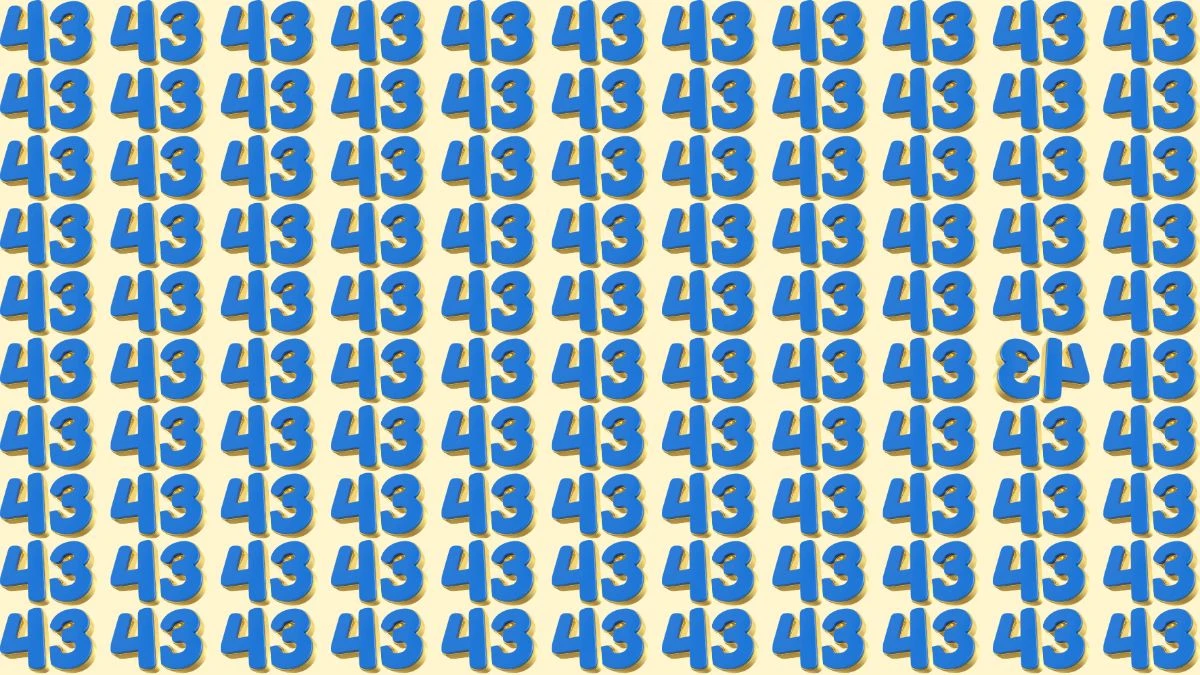
Image shows a repeating grid of blue “43” figures on a light background, with one subtly inverted number hidden among them.
At first, everything looks uniform. That’s exactly why this illusion is tricky.
Your brain is excellent at recognizing patterns — sometimes too excellent. Once it decides all the numbers are the same, it stops checking carefully.
Pro tip: Instead of reading the numbers, scan for shape differences — curves, angles, or alignment that feel “off.”
Still looking? Take a few more seconds…
Solution: Where Is the Inverted 43?
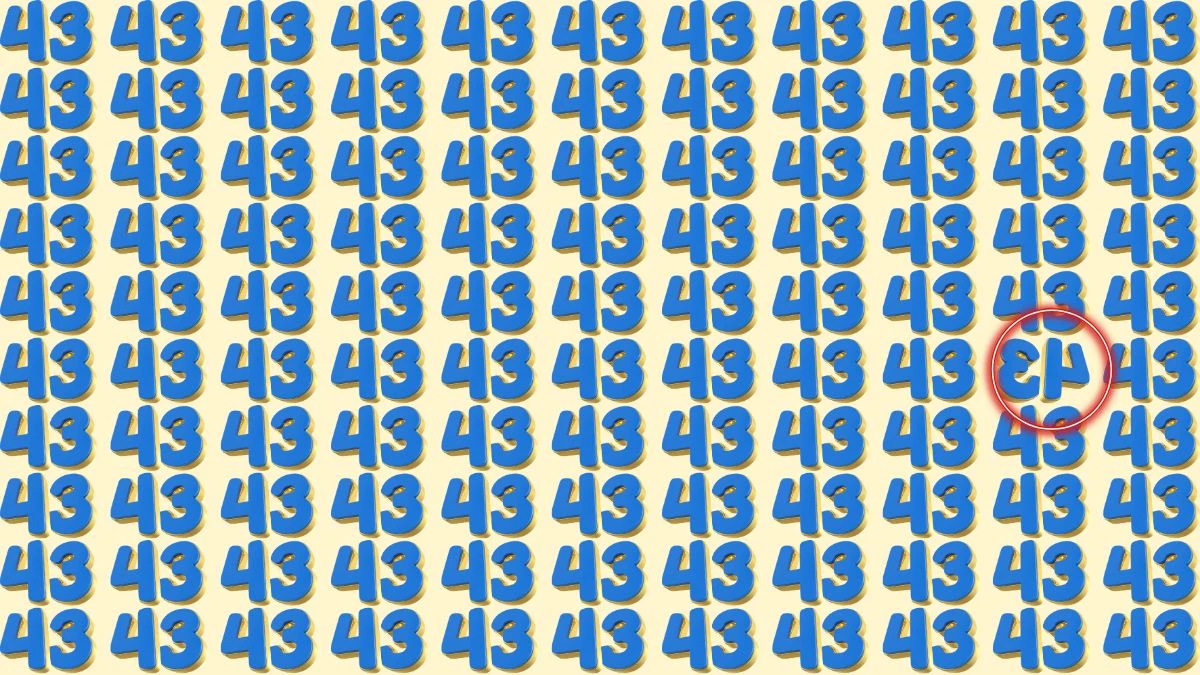
The inverted 43 is located toward the right side of the image, slightly below the center. Unlike the others, this one is flipped, making the “4” and “3” appear reversed when compared closely.
Once your brain notices the inversion, it suddenly becomes obvious — but until then, it blends in perfectly with the surrounding numbers.
If you spotted it within 7 seconds, that’s an excellent sign of strong visual perception and attention to detail.
Why This Optical Illusion Works
This illusion works because of a psychological shortcut called pattern locking.
Here’s what happens:
- Your brain sees repeated “43” shapes.
- It quickly labels the entire grid as “same, same, same.”
- After that, it stops analyzing each individual number.
The inverted 43 slips past your attention because it’s almost identical.
Our brains are wired for efficiency, not perfection — and optical illusions take full advantage of that.
How to Spot Differences Faster in Optical Illusions
Want to improve your performance in puzzles like this? Try these simple techniques:
- Scan diagonally, not row by row
- Look for shape orientation, not meaning
- Slightly blur your focus, then refocus sharply
- Compare edges and curves, not colors
- Take short breaks — visual fatigue makes illusions harder
This “Inverted 43” optical illusion is a great reminder that what we think we see isn’t always what’s actually there.
These puzzles aren’t about intelligence alone — they’re about patience, perception, and how your brain processes visual information.