Optical Illusion Puzzle IQ Test: Can You Spot the 67K Among 76K in Just 6 Seconds?
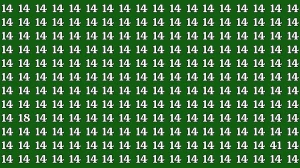
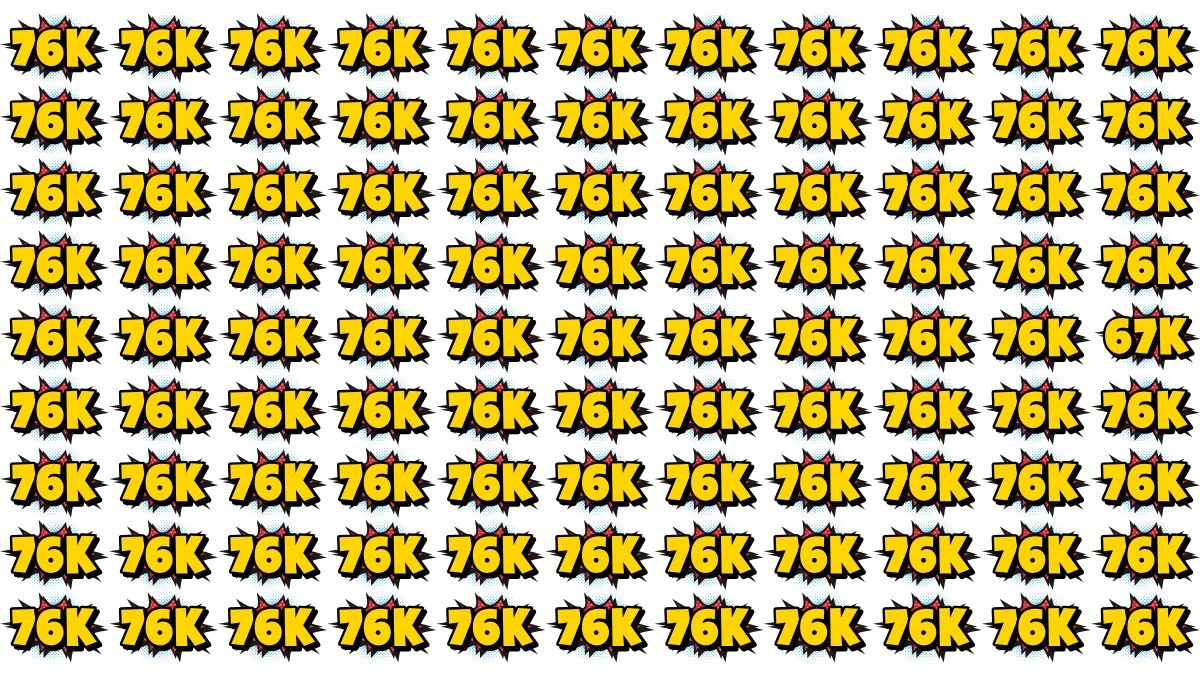
At first glance, this image looks loud and obvious—rows of 76K splashed across the screen in bold comic-style bursts. But hidden inside this visual noise is one sneaky impostor: 67K.
The challenge is simple but brutal on your focus: can you find 67K within 6 seconds?
Most people scan the image confidently… and still miss it.
The Challenge Image
Set a 6-second timer and start scanning. Don’t read every label—let your eyes hunt for inconsistency.
Quick tip:
Your brain quickly adapts to “76K” and starts skipping details. The trick is to look for order breaks, not meaning.
Why This Optical Illusion Works So Well
This puzzle exploits pattern dominance and visual fatigue.
Here’s what’s happening in your brain:
- Repetition of 76K creates a strong expectation
- Bold colors and shapes increase confidence, not accuracy
- Your mind assumes sameness to save time
The switch from 76K → 67K is subtle but deadly under time pressure—your brain sees what it expects, not what’s actually there.
The Answer: Where Is the 67K Hidden?
If you spotted the odd one out within 6 seconds, your pattern-breaking skills are excellent. If not, you’re in good company—this puzzle fools most viewers on the first try.
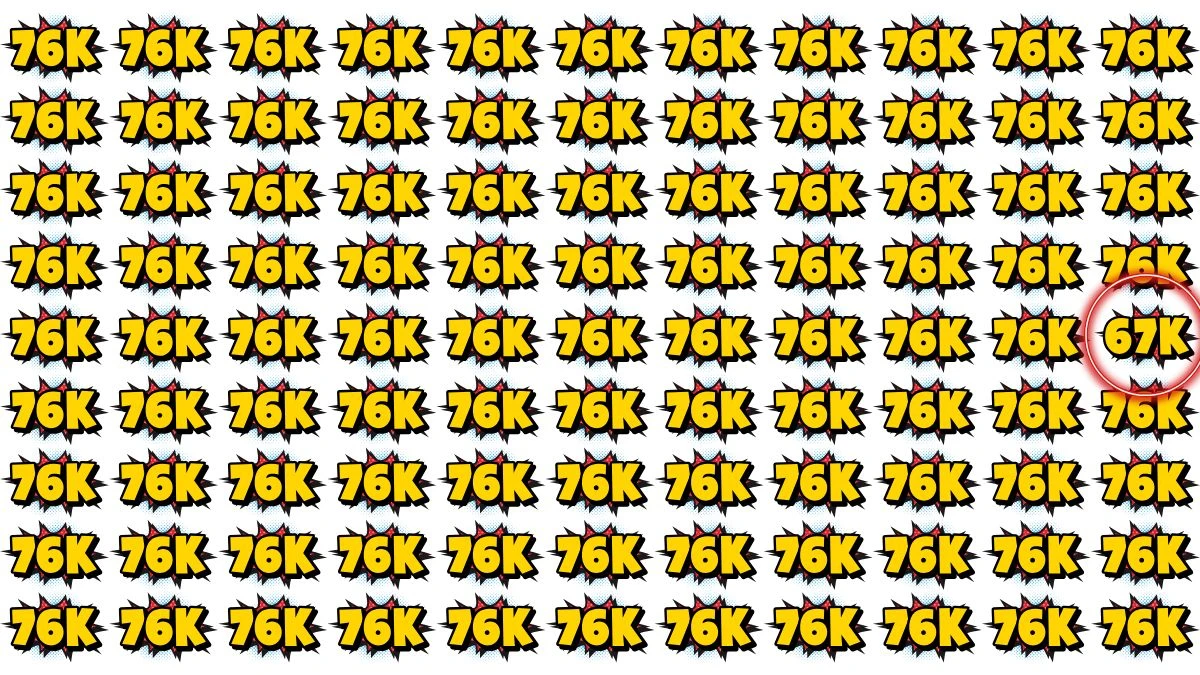
Here’s the solution image with 67K clearly highlighted.
What to Notice:
- 67K is located toward the right side of the image
- The digits are swapped compared to the dominant 76K pattern
- Once noticed, it instantly stands out
That sudden clarity is your brain snapping out of autopilot.
What This IQ Eye Test Reveals
Puzzles like this don’t measure intelligence directly—but they do reveal how your brain handles repetition and pressure.
- Fast spotters break visual habits quickly
- Careful scanners take longer but improve with resets
- Short time limits reward intuition over logic
These challenges are often used to sharpen focus and visual discrimination.
How to Spot Pattern Breaks Faster
Want to improve at optical illusion IQ tests? Try this:
- Scan diagonally instead of row-by-row
- Look at corners and edges first
- Briefly blur your focus, then refocus
- Search for what doesn’t belong, not what repeats
With practice, your brain gets better at resisting visual shortcuts.
This illusion proves one thing clearly: repetition is the brain’s biggest weakness. The 67K was always visible—you just had to really look.