Optical Illusion: Within 5 Seconds, Can You Spot the Number 33 Among 64 and 23?
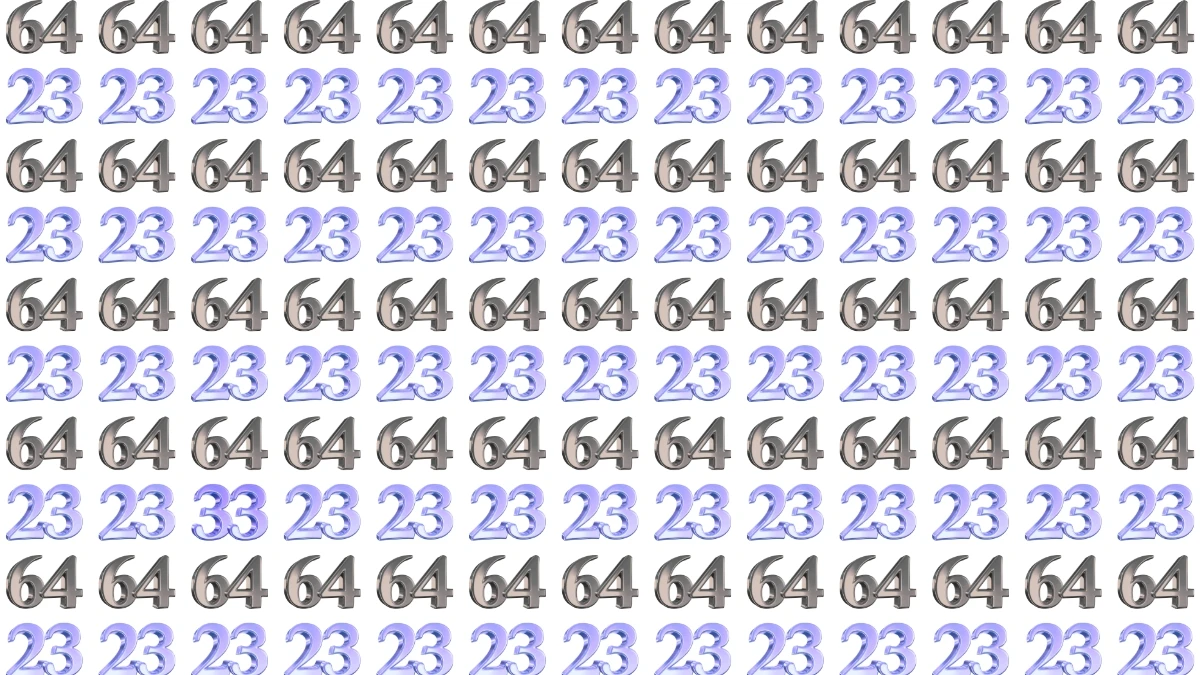
Can you spot the hidden number 33 among repeating 64 and 23 in just 5 seconds? Try this viral optical illusion puzzle and discover how your brain processes patterns and visual tricks.
Optical Illusion: Within 5 Seconds, Can You Spot the Number 33 Among 64 and 23?
At first glance, this image looks like a simple pattern of repeating numbers. Rows of metallic "64" and soft blue "23" create a clean, rhythmic grid that feels almost calming. But somewhere inside this orderly design, a single "33" has been tucked away similar enough to blend in, yet different enough to test your observation skills.
This kind of optical illusion isn’t just about eyesight. It’s about how quickly your brain can process visual information, recognize patterns, and detect subtle changes under time pressure. That’s why many people find themselves scanning the same row again and again, convinced the answer must be right in front of them.
Why This Optical Illusion Feels Tricky
Your brain is a powerful pattern-recognition machine. When it sees repeating elements like the consistent shapes of "64"and "23" it quickly forms a mental “template” of what it expects to find. Once that template is set, anything that looks even slightly similar can slip past unnoticed.
The number "33" is especially sneaky here because it shares curved shapes and visual weight with both 64 and 23. The similar color tone and font style also reduce contrast, making the odd number feel like part of the group rather than a clear intruder.
This is a classic example of "selective attention": your brain focuses on confirming what it expects instead of actively questioning every detail.
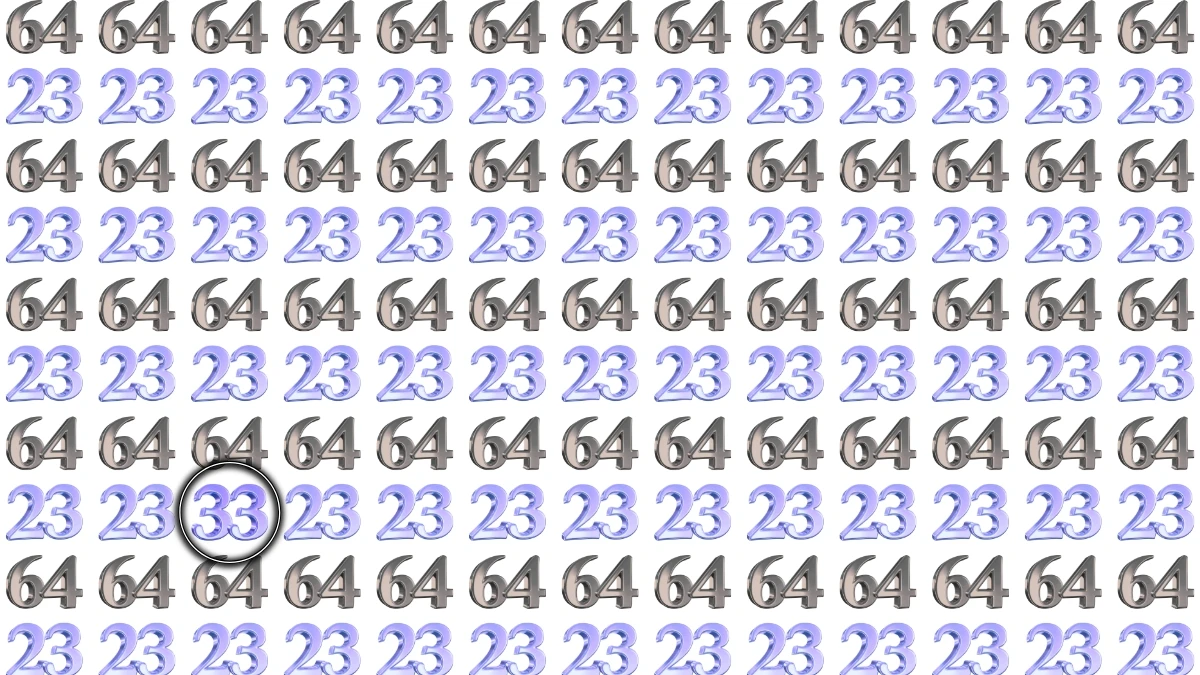
Solution: Where Is the Number 33?
If you didn’t catch it in five seconds, don’t worry most people need a second look. The hidden 33 appears in the "lower left of the grid", standing out only when you slow down and check each number carefully, one row at a time.
A helpful trick is to look specifically for "double curves" rather than full two-digit shapes. This often makes the “33” pop out against the more complex forms of “64” and the angled look of “23.”
Challenge Your Friends
Think you found the 33 quickly? Share this puzzle with friends or family and see who can beat your time.
It’s a fun way to turn a simple image into a friendly competition and a great reminder of how fascinating the human brain really is.