Optical Illusion: Can You Spot the Number 19 Among 16 and 26 in Just 5 Seconds?
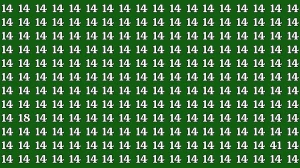
At first glance, this optical illusion looks playful and harmless—rows of 16 and 26 arranged in bright pink and blue colors. But hidden within this cheerful pattern is a single number that doesn’t belong: 19.
The challenge is simple but deceptive: can you find the number 19 within just 5 seconds?
Most people glance right past it because their brain quickly locks onto the repeating pattern.
The Challenge Image
Set a timer for 5 seconds and scan the image below carefully. Don’t read each number—let your eyes scan for something that feels different.
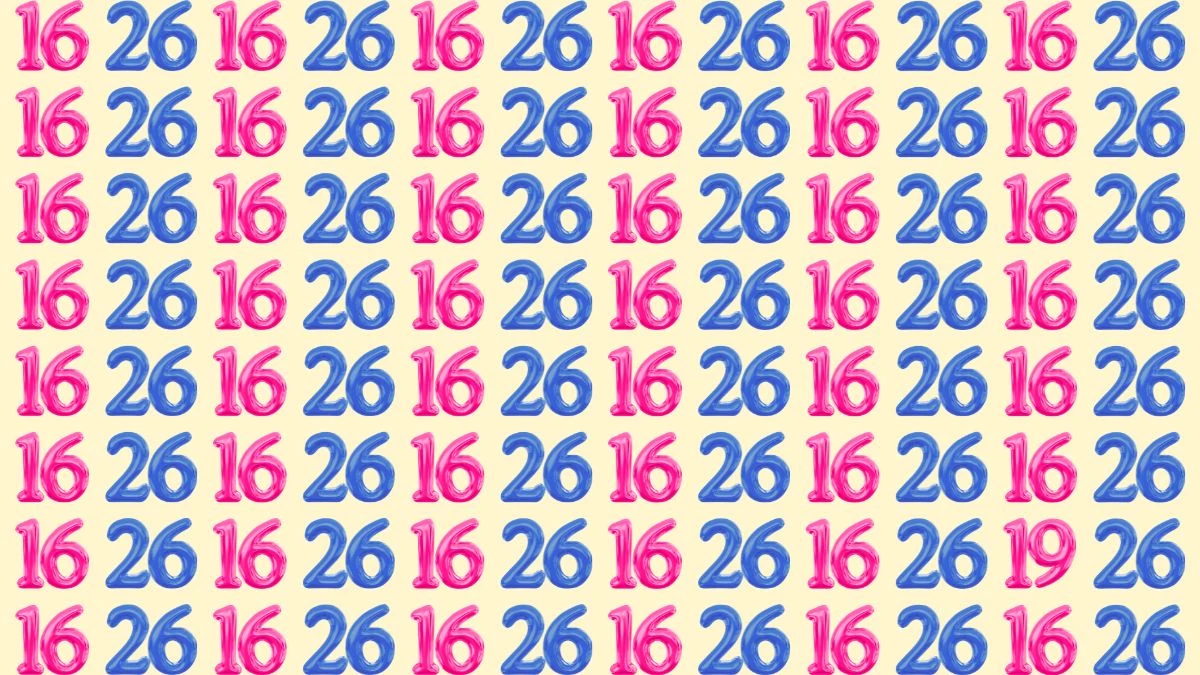
Quick hint:
Your brain expects only 16 and 26. The moment it assumes repetition, it starts skipping details—and that’s exactly where 19 hides.
Why This Optical Illusion Tricks Your Brain
This puzzle works because of visual expectation bias. When the brain sees alternating patterns, it predicts what comes next instead of verifying every detail.
Here’s what’s happening:
- 16 and 26 share similar shapes and rhythm
- Bright colors distract your focus from digit accuracy
- Your brain fills in missing information automatically
As a result, 19 blends in, even though it’s clearly different once noticed.
The Solution: Where Is the Number 19?
If you spotted 19 within 5 seconds, your observation skills are excellent. If not, don’t worry—this illusion is designed to fool even sharp eyes.
Here’s the answer image with the hidden number clearly highlighted.
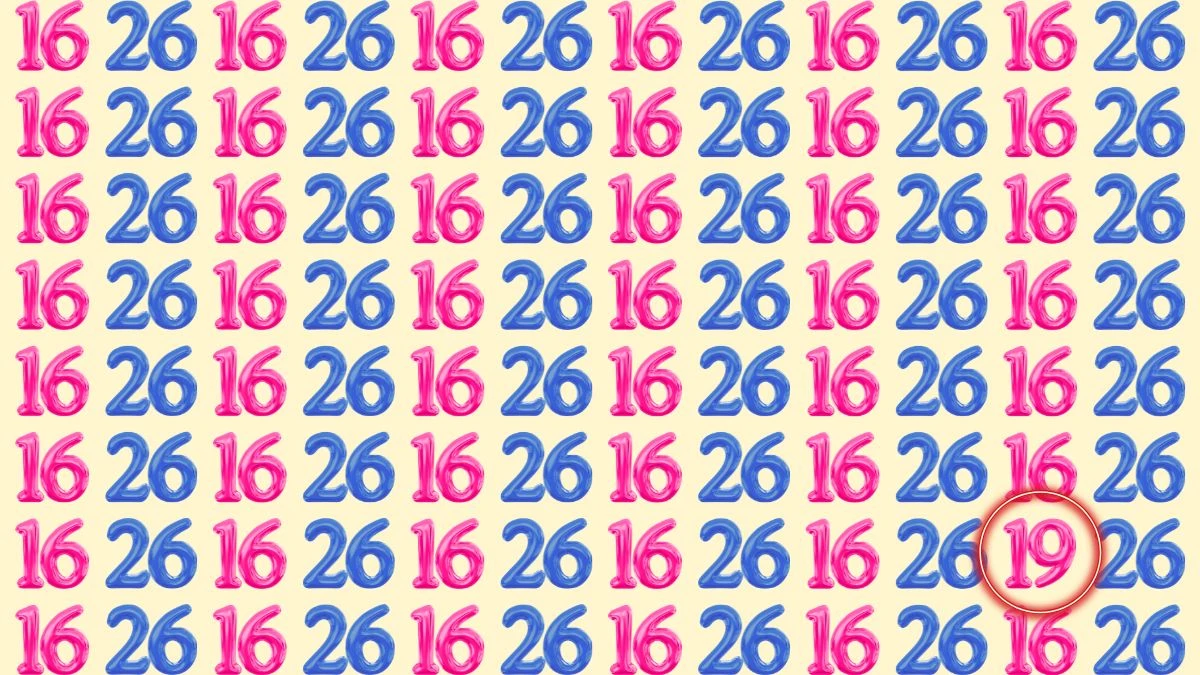
- The number 19 appears near the right side of the image
- It breaks the expected visual rhythm of 16–26
- Once seen, it becomes instantly obvious
What This Says About Your Observation Skills
Optical illusion challenges like this are a fun way to understand how your mind works.
- Fast finders rely on visual intuition
- Careful scanners use conscious checking
- Both styles are useful—this puzzle favors instinct
These illusions are often used to train focus, attention, and pattern recognition.
How to Spot Hidden Numbers Faster Next Time
Want to improve at these challenges? Try this:
- Scan diagonally instead of row-by-row
- Look at edges and corners first
- Blink once and restart your scan
- Search for what feels off, not what looks right
With practice, your brain learns to break out of autopilot mode.
If this illusion slowed you down, that’s a good thing—it means your brain was challenged. Optical illusions like this remind us that seeing isn’t always noticing.