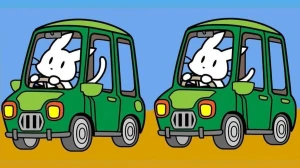
Spot the Difference: Can You Find 3 Differences Between These Two Images in 10 Seconds?
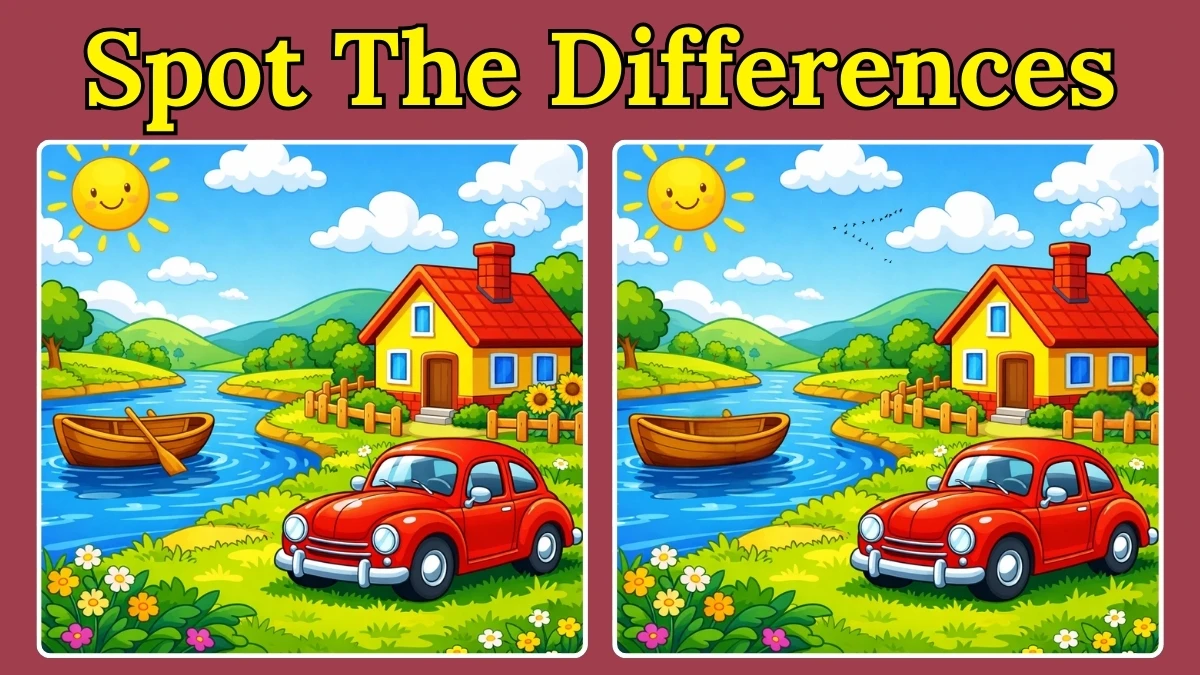
This fun and colorful spot-the-difference challenge is designed to test your visual focus, attention to detail, and observation speed. At first glance, both images look exactly the same — a peaceful countryside scene with a red car, a river, a sunny sky, and a cozy yellow house.
But don’t be fooled. Three subtle differences are hidden in plain sight, and only sharp eyes can find them all within 10 seconds.
Set your timer, take a deep breath, and let your brain go into detective mode. Are you ready?
The Secret to Finding the Hidden Differences
This illusion works by overloading your brain with familiar visual elements. Since the colors, shapes, and layout remain consistent between both images, your brain quickly assumes everything is identical.
The trick is to stop scanning randomly and instead compare one section at a time. Differences in these puzzles often hide in places your brain ignores — like the sky, small background details, or tiny changes in objects that seem unimportant.
The key is to slow your eyes, not your timer.
Solution: Where Are the 3 Differences?
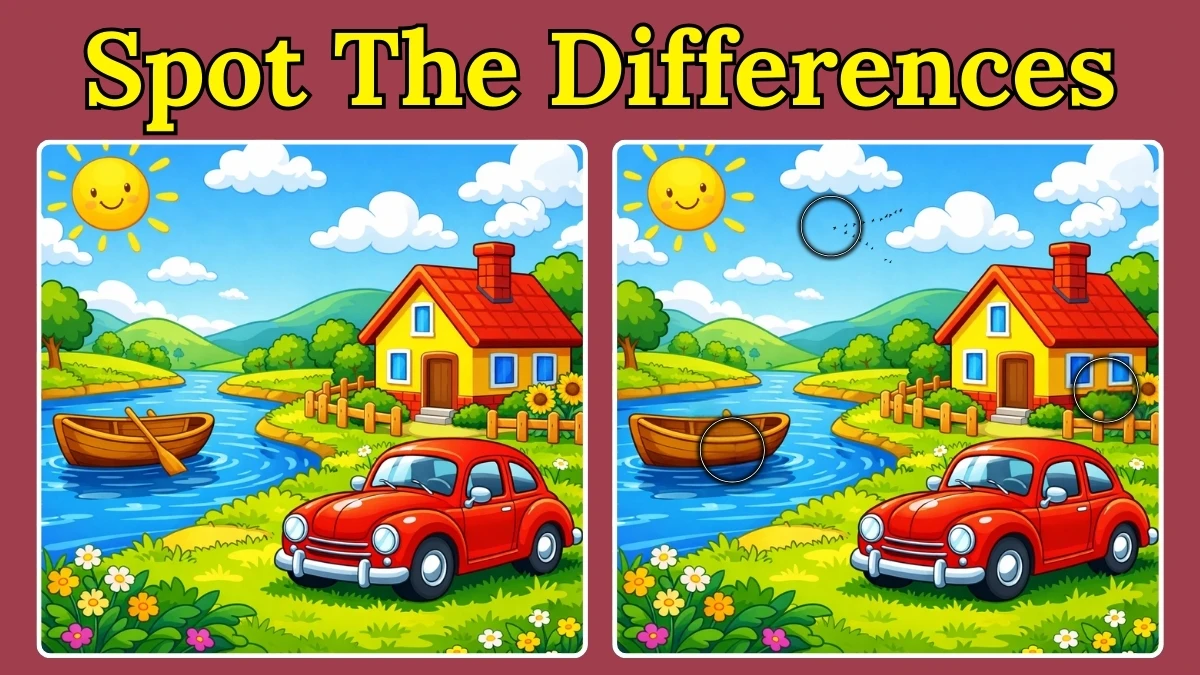
If you couldn’t spot all of them in time, here’s where the differences are located:
- Sky Area: In the right image, a small group of birds appears flying near the clouds, while the left image has a clear sky.
- Boat on the River: The paddle is missing in the boat on the right image, while the left image shows a wooden oar inside the boat.
- House Window Area: One of the window or fence details near the house is slightly altered, creating a subtle shape difference between the two scenes.
Why This Optical Illusion Works
This puzzle takes advantage of how the brain handles visual shortcuts and scene recognition. When your mind sees a familiar scene, it assumes everything matches unless something dramatic stands out.
Here’s what’s happening in your brain:
- Scene Lock-In: Your brain labels both images as “same” almost instantly.
- Detail Suppression: Small background changes don’t trigger alert signals.
- Speed Bias: You focus on big objects (car, house, river) instead of tiny clues.
That’s why subtle differences in the sky or small objects are the hardest to catch.
How to Spot Differences Faster in Visual Puzzles
Want to improve your success rate? Try these simple but powerful techniques:
- Scan in sections: Divide the image into sky, middle, and ground.
- Compare edges first: Differences often hide near borders and corners.
- Look for missing objects: It’s easier to spot what’s gone than what’s changed.
- Avoid jumping around: Move left to right, top to bottom, like reading a page.
These habits train your brain to see, not assume.
This spot-the-difference challenge proves how easily our brains can be fooled by familiar visuals. Even when two images seem identical, tiny changes in the background, sky, or small objects can slip past unnoticed.
Puzzles like this help sharpen your focus, memory, and visual awareness, making your brain quicker and more precise over time.
So how many differences did you find before the 10 seconds were up?