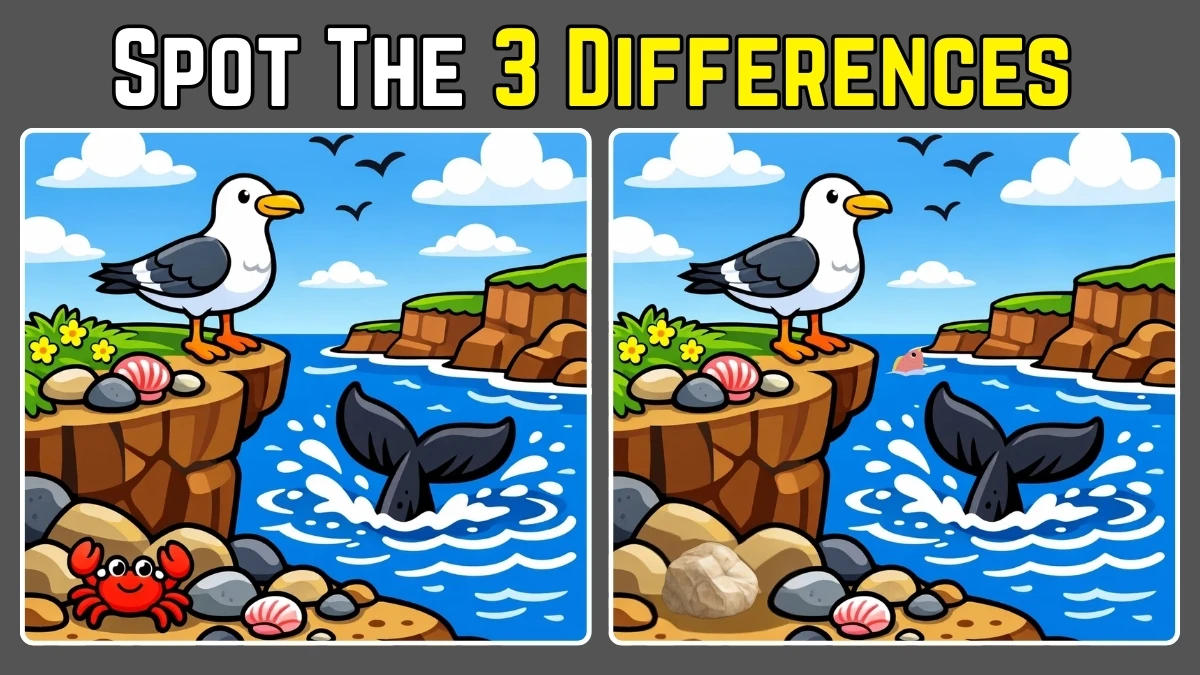
At first glance, these two images look pretty similar. A seagull perched on a cliff, overlooking the calm ocean with a whale tail in the water, a crab on the beach, and some seashells scattered around. The scene feels calm and natural, but don’t be fooled.
Your task is simple: Spot the 3 differences between the two images—but here's the challenge: You’ve only got 10 seconds!
Don’t rush too quickly; this puzzle is trickier than it looks.
Why Spotting These Differences Is Tricky
At first glance, everything seems perfectly in place. The seagull, whale tail, and crab are all where you'd expect them, and the cliff appears undisturbed. But optical illusions like this are all about subtle changes. These differences are so slight that it can be easy to overlook them if you're scanning the image too quickly.
It’s human nature to focus on the main subject—here, the seagull or the whale. But sometimes, differences sneak into the background or between small details. The trick is to break your attention into small sections of the image and examine them carefully.
The Three Differences Revealed
Here’s the breakdown of where the differences hide in this scene. Don’t worry—no more guessing. Let’s get to the answer!
Here are the three differences:
- The whale's tail -In one image, the whale tail is positioned in a slightly different angle compared to the other image.
- The Cloud - Small Cloud is missed in the right side image
- The crab’s location - The crab in the first image is sitting directly on the rock, but in the second, it’s moved slightly to the left, sitting on the sand.
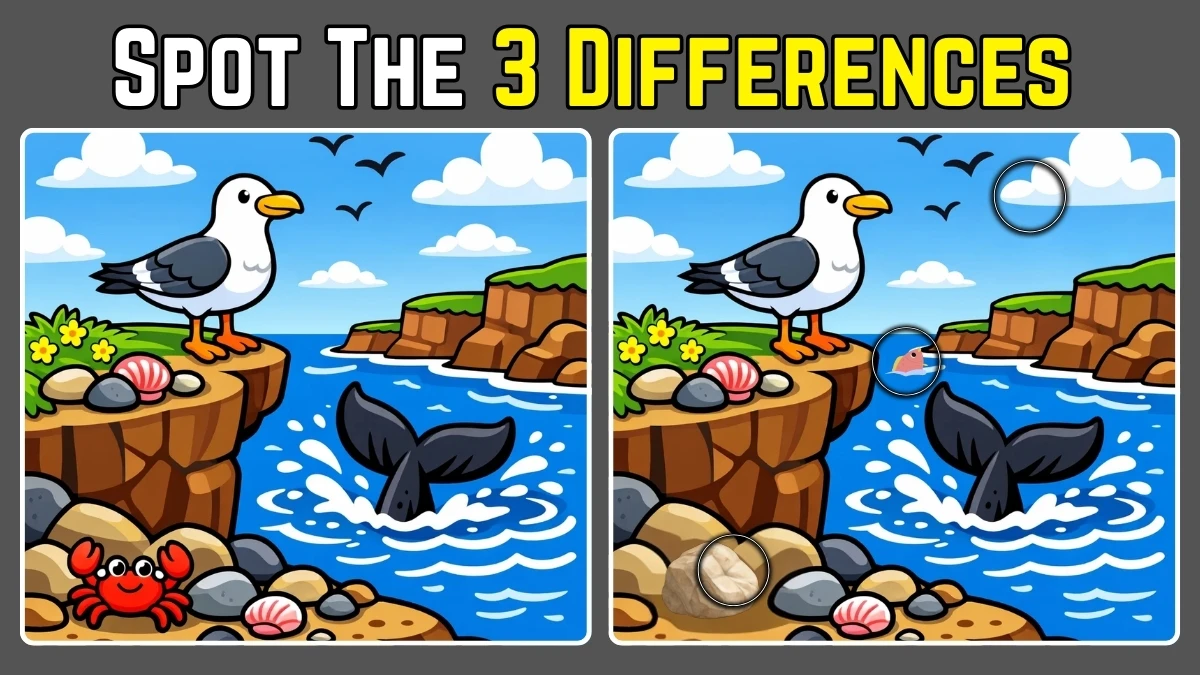
Once you know where to look, it’s easy to spot these changes, but without help, they can blend into the scene at first.
Why This Optical Illusion Works So Well
This puzzle works by playing on pattern recognition and attention to detail. Your brain is trained to spot familiar patterns quickly, which is useful in everyday life. However, in this puzzle, those familiar patterns are intentionally disrupted by small changes, like a flipped tail or slightly shifted crab. It’s these tiny differences that make this puzzle tricky.
Your brain expects everything to stay the same, but the differences aren’t in obvious spots—they hide in unexpected corners, forcing you to focus more closely.
How to Spot Differences Faster in Optical Illusions
If you enjoy this kind of challenge, here are a few tips to help you spot hidden differences faster next time:
- Break the image into sections: Instead of scanning the whole image at once, focus on one section at a time (e.g., the left side, then the right side).
- Look for irregularities in patterns: Changes in color, size, or position often indicate the difference.
- Take your time to focus on small details: Sometimes, the smallest details—like a single seashell or the wing of the bird—will reveal the change.
This puzzle is all about focusing on the details. It’s not about being quick—it's about observing carefully. Once you spot the differences, they become so obvious. But before you notice them, they can blend seamlessly into the scene, which is exactly what makes this optical illusion so fun.
Now that you’ve found all three differences, you’ve trained your eyes to catch the subtle changes in everyday visuals. The more you practice, the faster you’ll become at spotting the hidden details in future optical illusions!