Spot the Difference Challenge: Can You Find 3 Changes in Just 15 Seconds?
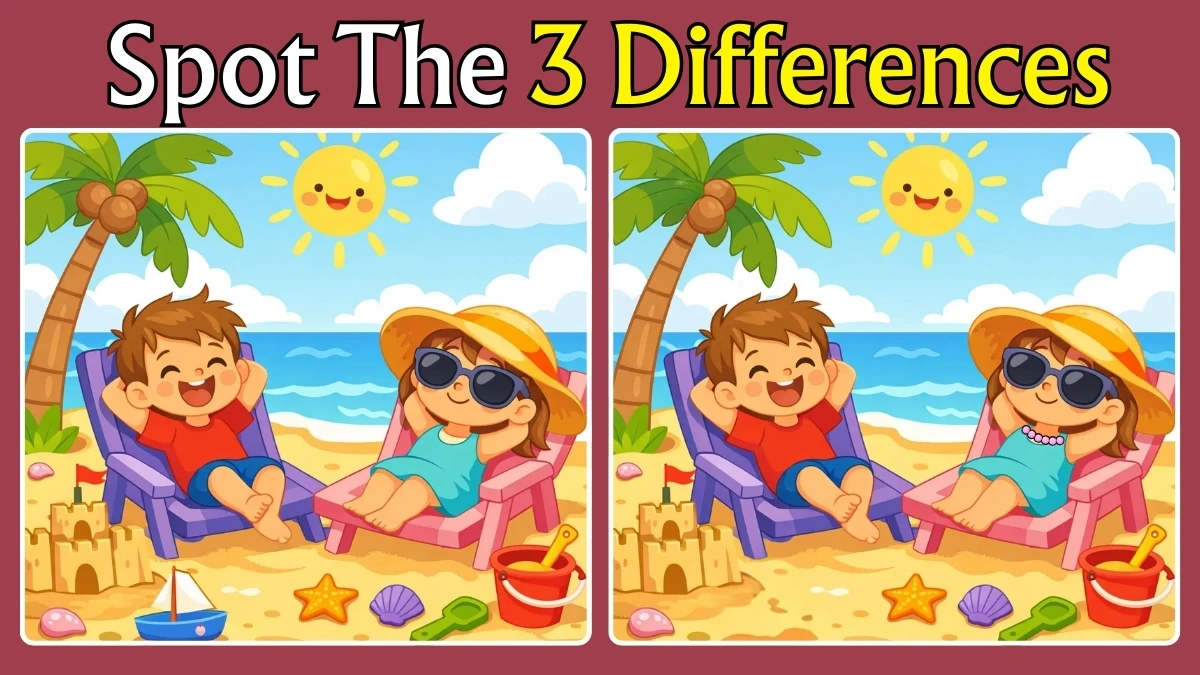
These two beach scenes may look bright, cheerful, and identical at first glance. A sunny beach day, with a happy boy and girl lounging on colorful chairs, playing with their beach toys, and surrounded by the vibrant beach environment. But don’t be fooled—three small differences have been hidden between the two images.
Your task is simple: Spot the 3 differences in just 15 seconds. Think you can do it?
It might seem easy at first, but these differences are subtle and tricky enough to make you pause and take a closer look.
Can you spot all three differences before time runs out?
Why Spotting These Differences Is Tricky
The bright colors and relaxing beach environment are designed to distract your eyes from the tiny differences that hide within the image. While the boy and girl, beach toys, and sunshine seem identical, the real challenge lies in the details.
It’s human nature to focus on the bigger, more obvious elements of a scene, like the characters, the sun, or the palm tree. But the differences are subtle: they’re hidden in the background or in tiny objects like the crab, sandcastle, or the kids' accessories.
The trick to solving this puzzle is slowing down and focusing on the finer details—don’t let the bright colors fool you!
The 3 Differences Revealed
Now that you’ve had a chance to look, let’s reveal the three differences. If you found them all, great job! If not, don’t worry—we’ve got you covered.
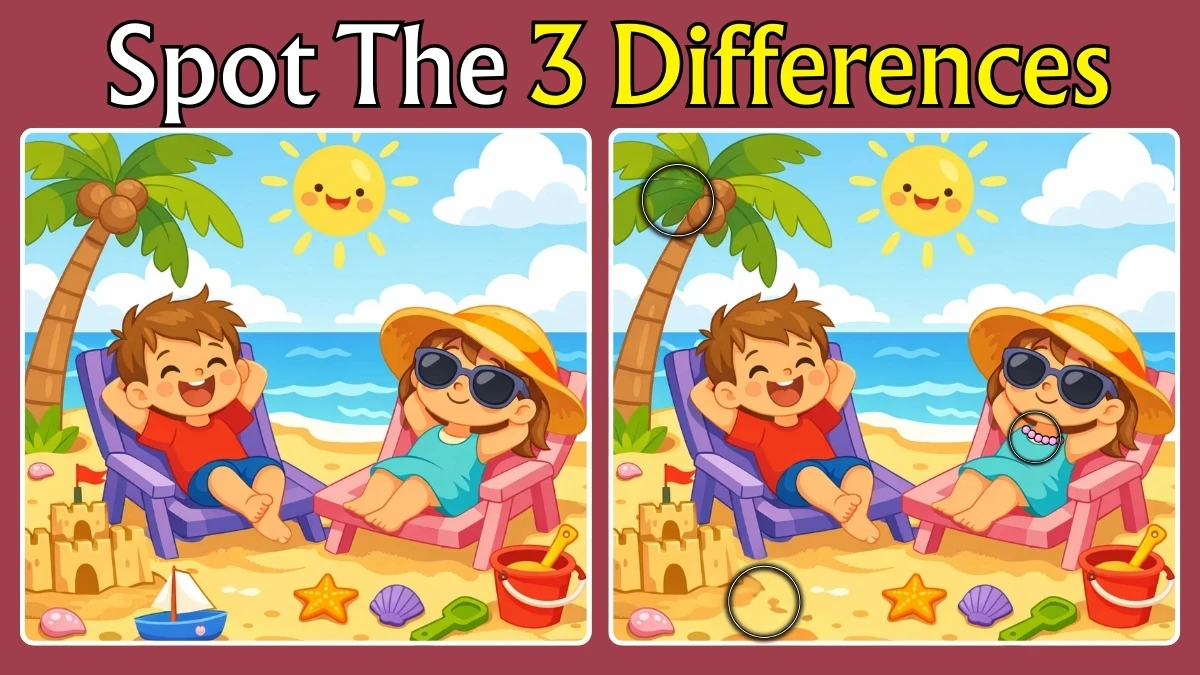
Here are the three differences:
- The Boat Toy - In one image, the boat toy is located on the sand near the shell
- The child’s necklace - In one image, the girl’s necklace has one extra bead, which is missing in the other image.
- The coconut Tree - The coconut was missed in one image
Now that you’ve spotted them, you can see how the differences are small, but they really break the uniformity of the image.
Why This Optical Illusion Works So Well
This puzzle works on a psychological principle called pattern recognition. Our brains are excellent at identifying familiar patterns quickly, and in this case, the brain assumes everything is the same when it sees a repetitive pattern.
However, the subtle changes in objects like the crab, necklace, and flag force you to shift your focus. It’s a great way to test your attention to detail.
What happens in the brain:
- The brain automatically groups identical objects together.
- Small variations (like the crab’s position) are ignored at first.
- Only after consciously slowing down does the brain begin to recognize the differences.
- That’s what makes this puzzle both fun and challenging!
How to Spot Differences Faster
If you’re a fan of these puzzles, here are a few tips to help you become quicker at spotting differences:
- Focus on the edges and corners: Often, the differences are hidden in smaller elements that might be overlooked in the center of the image.
- Scan the background: Objects like the crab, the starfish, and the flag are great places to start.
- Take your time on the details: Often, it’s the smallest things that make the biggest difference!
By practicing these strategies, you’ll become faster and more skilled at spotting differences in no time.
Optical illusions and puzzles like this one are all about sharpening your attention to detail. The challenge isn’t just about finding differences—it's about training your mind to slow down and pay attention to the finer points in any given scene.
Whether you found all three differences quickly or needed a little help, you've just practiced an important skill: noticing the small changes that make a big impact.