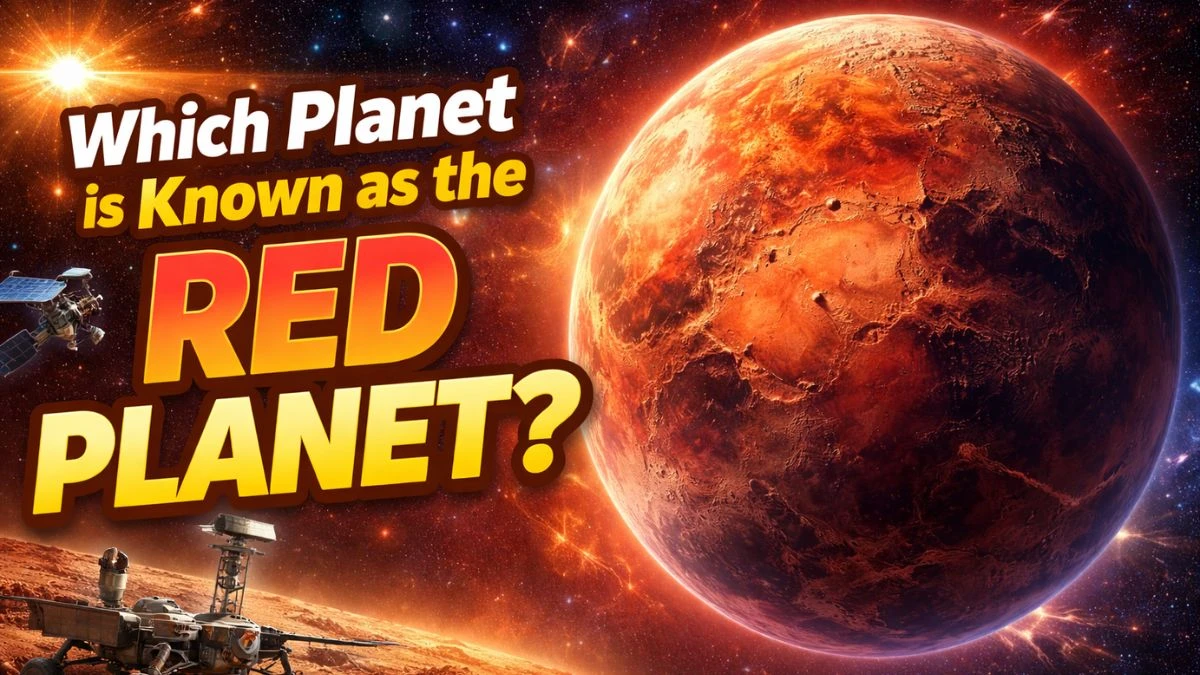

Mars is the fourth planet from the Sun, a small rocky world that's captured our imagination for centuries—mostly because of that striking reddish hue you can spot with the naked eye on clear nights. Often called the Red Planet, Mars has been a prime target for exploration, with rovers roaming its surface and orbiters snapping detailed photos, all in the quest to understand if it ever hosted life and what it might mean for humanity's future in space.
Mars: The Red Planet
Mars is the fourth planet from the Sun, a small rocky world famous for its red color and active exploration by space agencies.
Mars sits as the fourth planet in our solar system, orbiting the Sun at an average distance of about 228 million kilometers (1.5 AU). It's a terrestrial planet, meaning it's made mostly of rock and metal, much like Earth, Venus, and Mercury—unlike the gas giants farther out.
So why the nickname Red Planet? From Earth, Mars appears distinctly reddish-orange because of iron oxide—essentially rust—in its surface soil and dust. This iron has reacted with water and oxygen in Mars' ancient past, creating minerals that scatter sunlight in red wavelengths. Recent studies suggest the dominant reddish mineral might be ferrihydrite (a water-containing iron oxide) rather than just dry hematite, hinting at a wetter history than we once thought. During massive global dust storms, which can engulf the entire planet for months, that fine rusty dust gets lifted into the thin atmosphere, making the sky look butterscotch-colored from the surface and intensifying the red glow we see from afar.
What Is Mars and Why Is It Called the Red Planet?
Mars is the second-smallest planet in the solar system (after Mercury), roughly half Earth's diameter. Its position—farther from the Sun than Earth—means it's colder and drier overall, but its similarities to our planet make it fascinating: a day almost the same length as ours, seasons thanks to a similar axial tilt, and a landscape shaped by volcanoes, canyons, and ancient water flows.
The red color comes from iron-rich dust covering much of the surface. When iron oxidizes (rusts), it turns reddish, and Mars' fine, wind-blown dust amplifies this effect. Those planet-wide dust storms aren't rare—they can last weeks to months, whipping up the iron oxide particles and giving the planet its signature look even from telescopes millions of kilometers away.
Key Facts About Mars (Quick Overview)
| Fact | Details |
|---|---|
| Average distance from the Sun | 228 million km (1.52 AU) |
| Diameter | About 6,779 km (roughly half of Earth's) |
| Mass | 6.42 × 10²³ kg (about 10.7% of Earth's) |
| Length of a day (sol) | 24.6 hours (very close to Earth's 24 hours) |
| Length of a year | 687 Earth days (or 669.6 sols) |
| Average surface temperature | Around -60°C (-80°F), ranging from about 20°C (70°F) at the equator in summer to -153°C (-225°F) near the poles in winter |
| Number of moons | 2 (Phobos and Deimos) |
Mars’ Surface and Geography
Mars is a cold desert world today, with vast plains, towering volcanoes, and the solar system's largest canyon. The surface is dominated by reddish dust, sand dunes, and impact craters from billions of years of bombardment.
- Olympus Mons: The tallest volcano in the solar system, about 22 km (13.6 miles) high—three times taller than Mount Everest—and wide enough to cover an area the size of Arizona.
- Valles Marineris: A canyon system stretching over 4,000 km long and up to 7 km deep—imagine the Grand Canyon on steroids.
- Evidence of past water: Dry riverbeds, ancient lake basins, and deltas suggest flowing water once carved the landscape, possibly forming oceans or large lakes billions of years ago.
Polar ice caps (made of water ice and frozen CO₂) grow and shrink with the seasons, and subsurface ice deposits add to the picture of a planet that was once much wetter.
Mars’ Atmosphere and Climate
Mars has a very thin atmosphere—about 1% of Earth's pressure—mostly carbon dioxide (95%), with traces of nitrogen and argon. This thin blanket can't trap much heat, so temperatures swing wildly between day and night.
Winds can reach hurricane speeds, stirring up those global dust storms that block sunlight for months. Despite the cold, Mars has seasons like Earth because its axis tilts at about 25 degrees—northern summers bring melting polar caps and subtle changes in the landscape.
Moons of Mars: Phobos and Deimos
Mars has two tiny, irregularly shaped moons: Phobos (about 22 km across) and Deimos (about 12 km). They're likely captured asteroids, potato-like because their low gravity couldn't pull them into spheres.
Phobos orbits super close (about 9,400 km from the surface) and zips around Mars every 7.7 hours—it's slowly spiraling inward and may one day break apart or crash. Deimos is farther out, taking about 30 hours per orbit. Both are dark and cratered, offering clues about the early solar system.
Water on Mars: Past and Present
No liquid water flows on the surface today—it's too cold and the pressure too low—but evidence abounds for a wetter past: dried-up river valleys, lakebeds, and minerals that form only in water.
Ancient Mars likely had rivers, lakes, and maybe even a northern ocean. Today, water exists as ice in the polar caps and buried underground. Perseverance rover data from Jezero Crater shows signs of ancient deltas and sediments that could preserve biosignatures. Finding accessible water ice is crucial for future human missions—it could provide drinking water, oxygen, and rocket fuel.
Life on Mars: Is It Possible?
No confirmed life has been found on Mars—past or present—but it's one of the top places in the solar system to search for ancient microbial life. Rovers like Curiosity and Perseverance hunt for organic molecules, study habitable environments, and cache samples.
Conditions billions of years ago—liquid water, milder climate—might have supported simple life. Today's harsh surface (radiation, no liquid water) makes current life unlikely on the surface, but subsurface pockets with briny water or ice could theoretically harbor extremophiles. The big question: Did life ever start there, and if so, does any remain?
Missions to Mars: Past, Present, and Future
We've sent dozens of missions since the 1960s. Early flybys (Mariner) gave our first close-ups; Vikings in the 1970s were the first landers to search for life (inconclusive results).
Modern highlights:
- Curiosity (2012–present): Still exploring Gale Crater, confirming ancient habitable conditions.
- Perseverance (2021–present): In Jezero Crater, collecting sealed rock samples (as of February 2026, over 1,700 sols on Mars) and flying the Ingenuity helicopter (retired in 2024 after exceeding expectations).
Other agencies contribute: China's Tianwen-1 (orbiter + Zhurong rover, though Zhurong inactive), ESA's Mars Express, and more.
Future: NASA's Mars Sample Return was effectively canceled in early 2026 due to budget constraints and rising costs. China's Tianwen-3 aims to launch around 2028 and return samples by 2031. JAXA's MMX (launched late 2025/early 2026 window) will sample Phobos. SpaceX plans uncrewed Starship tests toward Mars in the late 2020s but has shifted primary focus to lunar missions first, with crewed Mars possibly in the 2030s.
Why Mars Matters for the Future of Space Exploration
Mars is our best bet for understanding if life is common in the universe and testing technologies for deep-space living. It's a stepping stone—learn to survive there, and farther destinations become possible.
Ideas like terraforming (thickening the atmosphere, warming the planet) remain speculative and centuries away, but studying Mars helps with radiation protection, resource use (like making fuel from CO₂), and closed-loop habitats. It's not just science—it's about expanding humanity beyond Earth.