
What is the Highest Military Rank in U.S. History That Has Been Held by Only Three Individuals?
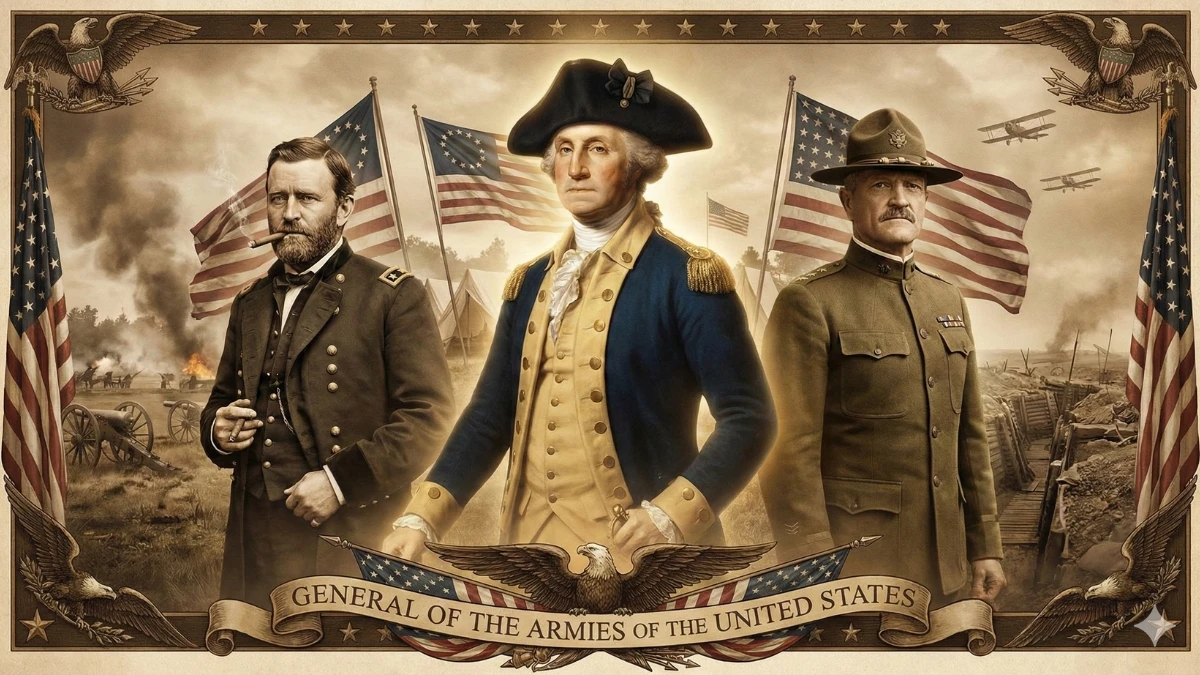
The highest military rank that only three people have ever held in U.S. history is General of the Armies of the United States. It sits above the five‑star rank and is treated as the country’s ultimate military grade, reserved for leaders whose impact went beyond a single war or era.
In a way, it is the “you cannot go higher than this” badge in the American rank system, rarely used and almost ceremonial, but symbolically very powerful.
Who Were the Three Holders?
The three individuals to hold General of the Armies are John J. Pershing, George Washington, and Ulysses S. Grant. Pershing received the rank in 1919 after leading American forces in World War I, and he was the only one to hold it during his lifetime.
Washington was promoted posthumously in 1976 so that he would be forever recognized as the most senior American officer, and Grant was posthumously elevated in the 2020s to match his decisive role in winning the Civil War.
How is It Different From Five‑star Ranks?
General of the Armies is considered senior to the five‑star rank of General of the Army, even though no official six‑star insignia has ever been standardized.
Five‑star ranks, like General of the Army or Fleet Admiral, were created mainly for World War II command structures, but General of the Armies is treated more as a national “top of all tops” recognition.
Some historians informally call it a “six‑star” idea, but in practice it has stayed rare, almost like a historical shout‑out rather than a rank used in day‑to‑day command charts.
Why Does This Rank Still Matter Today?
This rank still matters because it shapes how the country remembers its most important military leaders and how U.S. military history is explained to new generations.
When school students or trivia fans ask which rank stands above all others in the U.S., the answer points back to General of the Armies and to those three names tied closely to the nation’s survival and identity.
Even in recent discussions and explainer videos from January 2026, this question keeps trending because it feels like a neat shortcut into a much bigger story about war, politics, and legacy.
Quick Reference Table
| Person | When made General of the Armies | Context / reason in brief |
|---|---|---|
| John J. Pershing | 1919 | Leadership of U.S. forces in World War I. |
| George Washington | 1976 (posthumous) | Ensuring he remains the most senior U.S. officer in history. |
| Ulysses S. Grant | 2020s (posthumous recognition) | Honoring his decisive Civil War command and later reassessing his standing. |
Disclaimer: This is for general historical information only and does not represent official military, government, or legal advice; readers should verify key details through authoritative defense and archival sources.