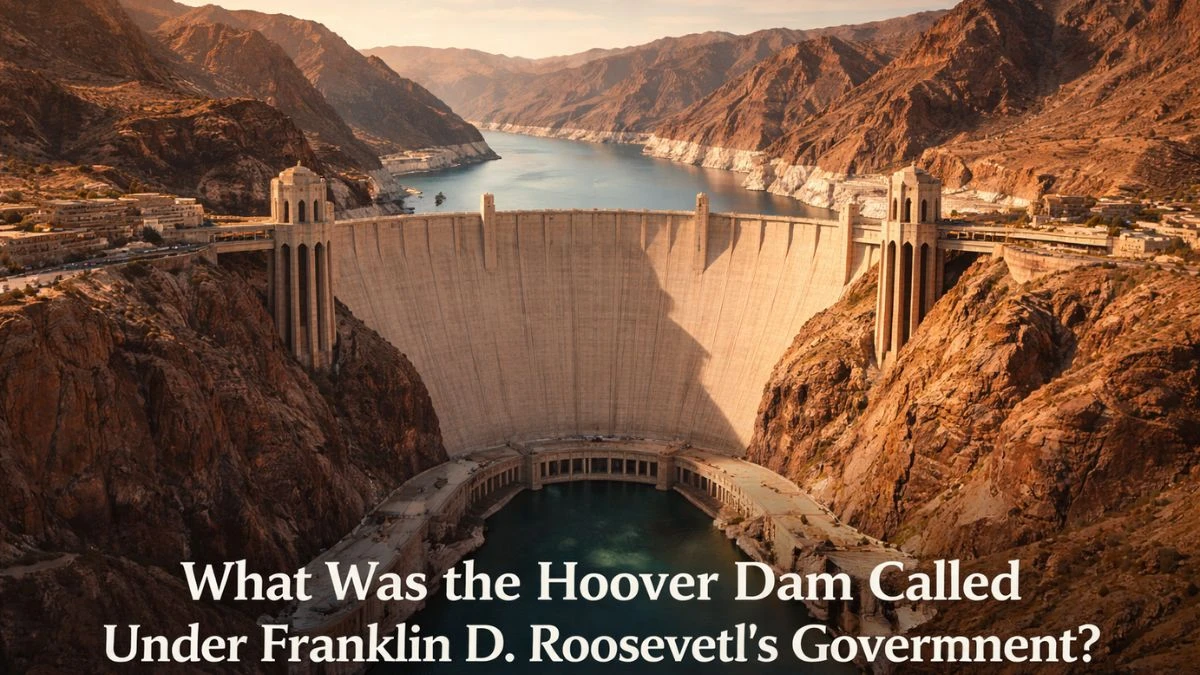

What Was the Hoover Dam Called Under Franklin D. Roosevelt’s Government?
Under Franklin D. Roosevelt’s government, the Hoover Dam was officially referred to as Boulder Dam. During most of the 1930s and early 1940s, federal agencies, maps, tourist brochures and even the President himself used “Boulder Dam” in speeches and documents, even though an earlier act of Congress had already recognized the name Hoover Dam.
For people living around the Colorado River at the time, the two names almost became a kind of political code word: which one someone used often hinted at how they felt about Herbert Hoover and the new administration in Washington.
Why Was the Hoover Dam Renamed During Franklin D. Roosevelt’s Presidency?
The dam was renamed to Boulder Dam under Roosevelt largely because his administration wanted to distance the project from former President Herbert Hoover, who had become deeply unpopular after the stock market crash and the early years of the Great Depression.
In 1933, soon after Roosevelt took office, Interior Secretary Harold Ickes issued an order directing federal employees to use “Boulder Dam” in all official references, arguing that the earlier decision to name it after a sitting president had been inappropriate and never formally ratified by Congress.
There was also a practical angle: before construction, engineers and lawmakers had long spoken about a big project on the Colorado as the Boulder Canyon scheme, so “Boulder Dam” felt familiar, technical and safely neutral.
Still, the switch did not end the argument. Supporters of Hoover kept using the original name, and the naming dispute simmered quietly for more than a decade until 1947, when Congress passed a resolution signed by President Harry Truman restoring “Hoover Dam” as the official and permanent title.
Historical Reasons Behind the “Boulder Dam” Name
Historically, the Boulder Dam name came from the project’s origins in the Boulder Canyon Project Act of 1928, which authorized construction of a large dam on the Colorado River to control floods, store water and generate power.
Early planning documents regularly described it as the Boulder Canyon dam, even though the final site was chosen in nearby Black Canyon.
Naming big dams after the law or location, rather than after presidents, was standard practice at the time, so many engineers and politicians saw “Boulder Dam” as the natural, almost automatic choice.
The twist came in 1930 when Interior Secretary Ray Lyman Wilbur, serving under Hoover, publicly christened the structure “Hoover Dam” at a construction ceremony, praising Hoover as the engineer‑statesman who had helped make the project possible.
After the election defeat of 1932, Roosevelt’s team reversed course and leaned back on the older Boulder name, which conveniently matched both the project act and the new political mood.
The result was a long period when guidebooks, postcards and even road signs used Boulder Dam, while many locals and engineers stubbornly kept saying Hoover proof that sometimes, even concrete giants cannot escape the shifting tides of politics and memory.
Disclaimer
Information about the Hoover Dam’s naming history is drawn from historical records and secondary research on US public works in the 1930s and 1940s. Exact wording in speeches, laws and administrative orders may vary by source, so readers should consult primary documents for academic or legal use.