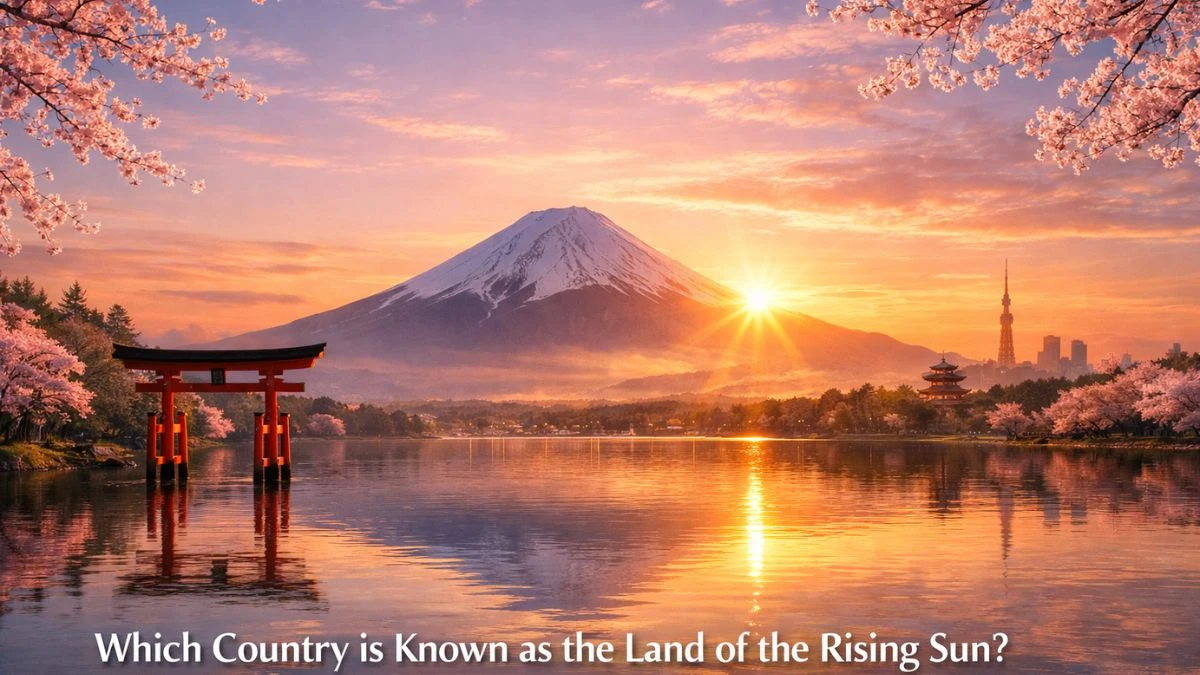

Which Country is Known as the Land of the Rising Sun?
The country known as the land of the rising sun is Japan. That poetic title isn’t just a tourism slogan; it’s literally baked into Japan’s own name in Japanese, Nihon or Nippon, which means “origin of the sun” or “sun’s source.”
For centuries, people in East Asia have looked eastward and imagined the sun “coming from” that island nation, and the phrase simply stuck.
Geographically, Japan sits to the east of China and the Korean peninsula, so from the old Chinese court’s point of view, the sun appeared to rise from Japan’s direction.
That eastern position, combined with trade, diplomacy, and mythology, slowly turned into an identity not just where Japan is on the map, but how the country likes to present itself to the world.
Even today, the rising sun shows up everywhere: on the national flag, in company logos, and in anime openings that love a dramatic sunrise shot.
Why is Japan Called the Land of the Rising Sun?
Japan is called the land of the rising sun because its historical name, Nihon/Nippon, uses the characters (sun) and (origin), literally “origin of the sun.”
The phrase grew out of diplomatic contacts with China as early as the 7th century, when Japanese rulers used expressions like “from the emperor of the rising sun” in letters to the Chinese court.
To the Chinese, it described a country lying where the sun rises; to the Japanese, it gradually became a proud label. There’s also a mythological layer.
In Shinto belief, the sun goddess Amaterasu is a central deity, and the imperial family traces its legendary origins back to her.
When a nation worships a sun goddess, flies a flag with a red sun disk (the Hinomaru), and calls itself the “origin of the sun,” it’s not surprising the rest of the world starts using “land of the rising sun” as shorthand.
A Quick Look at Japan’s Name and Symbols
Japan hasn’t always been called Japan, or even Nihon. Early Chinese records used names like Wa or Wakoku, before Nihon became official around the 7th–8th centuries.
The shift to a name that literally highlights the sun wasn’t accidental; it reflected how the country wanted to be seen in a Sinocentric world, not tiny or insignificant, but the place where the new day begins.
A couple of details that make the “rising sun” title feel very concrete:
-
The national flag, Nisshoki (better known as Hinomaru), is just a red circle on white with a stylized sun.
-
The “rising sun” motif appears in military history, traditional art, festival imagery, and modern branding, so it’s more than just a line in a quiz book.
Disclaimer
This information is intended for general knowledge and educational purposes, especially quizzes and exams. While the nickname and explanations are widely accepted, curricula and question patterns may vary by board or institution. Learners should always cross-check crucial facts with their textbooks, teachers, or official exam syllabi before relying on them.