
Which William Shakespeare Play Inspired the Title of Aldous Huxley’s Novel Brave New World?
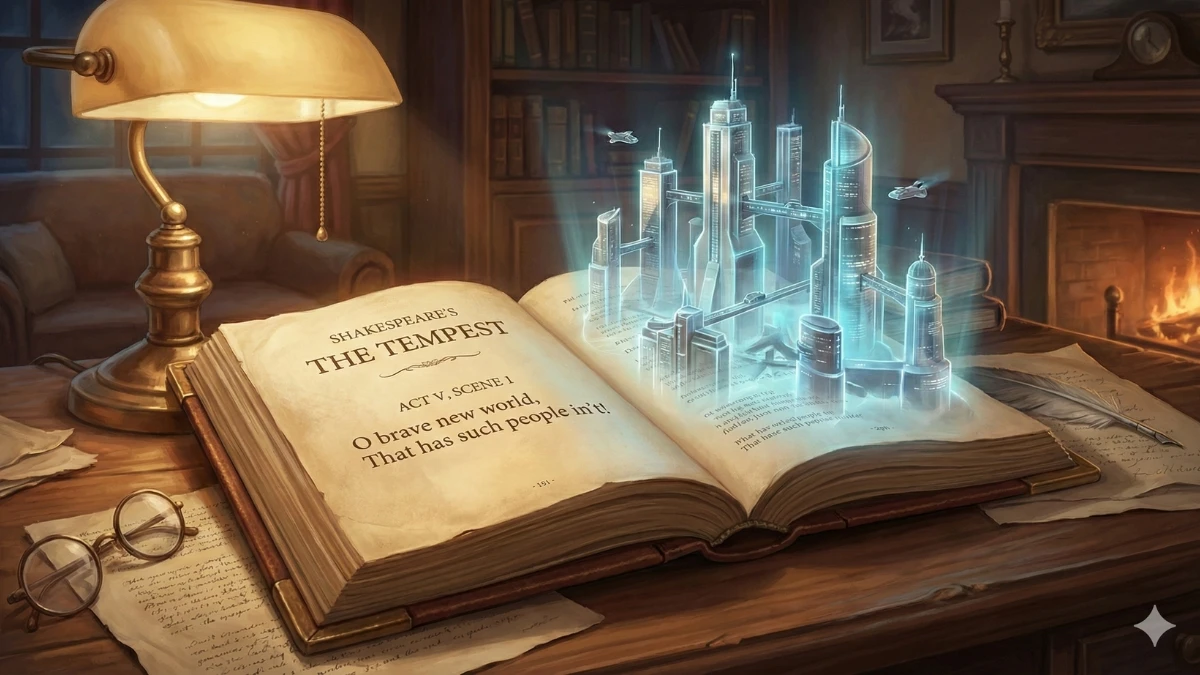
The title of Huxley’s novel is inspired by Shakespeare’s The Tempest, his late romance filled with storms, magic, and messy family dynamics.
In the final act, Miranda who has only known her father Prospero, the enslaved Caliban, and a very quiet island suddenly sees a shipwrecked group of men and responds with that famous line about a “brave new world,” genuinely impressed by what she believes is the best of humanity.
Readers often meet this quote in school as a hopeful phrase, but in context it already has a slight edge, because Prospero immediately undercuts her optimism with a dry, “’Tis new to thee,” hinting that experience will change how she sees people.
That little clash between innocence and reality is exactly what gives the phrase its staying power and made it so useful for a dystopian title later on.
How Does Huxley Reuse “brave New World”?
Huxley takes Miranda’s hopeful “brave new world” and turns it into an ironic label for a future society where people are engineered, conditioned, and kept content with easy pleasure instead of real freedom.
In the novel, Shakespeare appears repeatedly, especially through the character John (often called “the Savage”), who quotes lines from the plays to make sense of his own feelings, including that same “brave new world” phrase when he first encounters the World State’s sleek but unsettling civilization.
Over time, the words that once sounded full of promise start to feel like a bitter joke, echoing a pattern many readers recognize today when new technologies or systems arrive looking shiny and progressive, but later reveal uncomfortable trade-offs.
Why Does the Quote Still Appear in Recent News and Pop Culture?
The phrase “brave new world” continues to show up in headlines, commentary, and entertainment because it neatly captures the mix of excitement and unease that comes with big changes whether in AI, biotech, or politics.
Even major franchises borrow it: Marvel’s film Captain America: Brave New World, released in 2025, uses the phrase to suggest a new political and social landscape for its hero, tying into the same themes of shifting power and uncertain futures that worried Huxley, though in a more action-driven way.
In everyday language, people still use “brave new world” when talking about starting a job, moving countries, or facing a wave of new technology, often with a mix of curiosity and caution that feels surprisingly close to both Miranda’s awe and Huxley’s warning.
Disclaimer: This content is for general information and educational purposes only and should not be treated as formal academic or professional advice. Readers should refer to original texts and reputable critical sources for in-depth study.