

Top 5 Best Camera Phones Under ₹20,000 (January 2026)
If you're hunting for a camera phone that doesn't massacre your bank account, the sub-₹20K segment has gotten genuinely competitive. Gone are the days when budget phones meant compromising on photo quality.
But here's the reality check - not every "50MP camera" lives up to the hype, and marketing specs rarely tell the full story.
I've spent weeks testing these phones in real-world scenarios - from chai stall lighting to beach sunsets - to find which ones actually deliver on their camera promises.
1. Poco X7 5G - Best Overall Camera Under ₹20K

Price: ₹16,999
The Poco X7 walks into the budget camera segment and immediately makes most rivals look dated. That 50MP Sony IMX882 sensor isn't just spec-sheet bragging - it captures details that phones ₹5K more expensive struggle with.
Camera Performance
Daylight photography is where this phone shines brightest. Colors are punchy without looking cartoonish, and that's harder to nail than you'd think. The dynamic range handles harsh afternoon sunlight surprisingly well - you're not getting those blown-out skies that plague cheaper phones.
Low light is where things get interesting. Without OIS, you'd expect mediocre night shots, right? Poco's software does heavy lifting here. Night mode takes 3-4 seconds to process, but the results are clean. Not flagship-level clean, but definitely class-leading for ₹17K. Street food photography at night actually looks appetizing.
The 8MP ultrawide is decent - not mind-blowing, but usable for landscape shots. That 2MP macro? Forget it exists. Portrait mode edge detection is surprisingly accurate, probably the best in this price bracket.
Video: 4K/30fps recording is stable enough for casual vlogs. No OIS means you'll need steady hands, but electronic stabilization does its job for walking shots.
Other Highlights
- Display: 6.67" 1.5K AMOLED at 120Hz - gorgeous for reviewing photos
- Processor: Dimensity 7300 Ultra handles photo processing without lag
- Battery: 5500mAh with 45W charging (full charge in 70 mins)
Pros & Cons
| PROS | CONS |
|---|---|
| Sony IMX882 sensor captures sharp, detailed photos in daylight | No OIS means handheld video shows micro-jitters |
| Night mode produces clean, usable low-light shots without OIS | Macro camera is pointless - 2MP produces blurry results |
| Portrait mode edge detection beats rivals at this price | HyperOS filled with ads and bloatware hurts user experience |
| 1.5K AMOLED display makes photos look stunning when reviewing | Ultrawide photos lack sharpness in corners |
| Premium leather finish and aluminum frame feel ₹25K+ | Front camera struggles with backlit selfies |
| Fast photo processing - zero shutter lag in good lighting | UFS 2.2 storage slower than competitors with UFS 3.1 |
Buying Decision
| BUY IF | SKIP IF |
|---|---|
| Photography in good lighting is your priority | Vlogging/video content creation is your main use |
| You want premium build quality with camera chops | Clean Android experience matters (too much bloatware) |
| Instagram-worthy photos matter more than video recording | You shoot a lot of ultrawide/macro (limited versatility) |
| Display quality for reviewing shots is important | Software updates beyond 2 years matter to you |
Verdict: At ₹16,999, this is the camera phone to beat under ₹20K. The main sensor performance alone justifies the price. Wait for ₹15,999 during sales if you're patient.
2. Samsung Galaxy F36 5G - Most Versatile Camera Setup

Price: ₹17,499
Samsung brings its flagship camera tuning to the budget segment, and it shows. While the hardware might not wow you on paper, the image processing is where Samsung's experience shines.
Camera Performance
The 50MP main camera delivers that signature Samsung look - slightly saturated, high contrast, Instagram-ready straight out of camera. Some purists hate it, but for social media, it just works. Colors pop without looking fake.
Where Samsung pulls ahead is consistency. The F36 rarely delivers a bad shot in good lighting. Dynamic range is excellent for the price - those sunset shots actually preserve detail in both highlights and shadows.
Low light is Samsung's Achilles heel here. No dedicated night mode means you're relying on software optimization alone. Results are acceptable but not impressive - definitely behind the Poco X7.
The 8MP ultrawide is where Samsung's tuning shows. It maintains color consistency with the main camera, which most budget phones botch completely. Distortion correction is also better than rivals.
Video: Surprisingly good 1080p/60fps stabilization. Samsung's EIS (electronic image stabilization) is mature tech at this point. Better for casual video than phones with flashier specs but worse processing.
Other Highlights
- Display: 6.7" FHD+ AMOLED, 120Hz - vibrant but not as sharp as Poco's 1.5K panel
- Processor: Exynos 1380 - dated but handles camera processing fine
- Software: One UI with 4 years of updates (huge advantage)
- Battery: 5000mAh, slow 25W charging (90 mins full charge)
Pros & Cons
| PROS | CONS |
|---|---|
| Consistent image quality across lighting conditions - rarely disappoints | Exynos 1380 feels sluggish in heavy apps - noticeable lag |
| Ultrawide maintains color accuracy with main camera (rare at this price) | Low-light photo quality trails Poco X7 and Realme P3 Pro |
| One UI camera app is intuitive with useful modes | 25W charging is painfully slow in 2025 |
| 4 years OS updates + 5 years security (best in segment) | Notch display looks dated - distracting for full-screen photos |
| 1080p/60fps video stabilization beats spec-heavy rivals | Single speaker insufficient for video playback |
| Night portrait mode works better than expected | Selfie camera lacks detail in indoor lighting |
Buying Decision
| BUY IF | SKIP IF |
|---|---|
| Long-term software support (4 years) matters to you | Performance matters - that Exynos chip shows its age |
| Consistent, predictable photo quality is priority over peak performance | Low-light photography is critical |
| You prefer Samsung's color science for social media | Fast charging is non-negotiable |
| Ultrawide photography is important to you | You want cutting-edge design (notch is 2020 tech) |
Verdict: Best choice if you plan to keep the phone 3+ years. Camera is reliable rather than spectacular. At ₹17,499 it's slightly overpriced - ₹15,999 would be the sweet spot.
3. CMF Phone 2 Pro - Best Telephoto Under ₹20K

Price: ₹16,499
CMF (Nothing's sub-brand) does something genuinely different here - throws a 50MP telephoto lens into a sub-₹17K phone. That's unheard of in this segment, and it changes everything for portrait and product photography.
Camera Performance
The 50MP main camera using Sony IMX890 sensor is flagship territory. This is the same sensor used in phones double the price. Photos are sharp, colors are accurate (more natural than Samsung's processing), and HDR is well-balanced.
But the star is that 50MP telephoto. 2x optical zoom means portrait shots have that natural bokeh compression you can't fake with digital zoom. Product photography for small businesses? This phone makes sense. Food bloggers will love the shallow depth of field at 2x zoom.
Low light is solid - better than Samsung, slightly behind Poco. The telephoto struggles after sunset though, which is expected at this price.
The 8MP ultrawide is average. Serves its purpose but nothing special.
Video: 4K/30fps is decent but lacks OIS. The telephoto can't shoot video, which is disappointing.
Other Highlights
- Display: 6.77" FHD+ AMOLED, 120Hz - crisp and color-accurate
- Processor: Dimensity 7300 Pro - smooth performance
- Design: Modular back with swappable accessories (unique selling point)
- Battery: 5000mAh with 33W charging
Pros & Cons
| PROS | CONS |
|---|---|
| 50MP telephoto delivers 2x optical zoom - unmatched in segment | No OIS on any camera - video suffers from jitter |
| Sony IMX890 main sensor rivals ₹35K phones for photo quality | Mono speaker is underwhelming for media consumption |
| Portrait photography with natural bokeh compression | Telephoto unusable in low light - drops to digital zoom |
| Clean Nothing OS 3.0 with minimal bloatware | 33W charging feels slow compared to 80W rivals |
| Accurate color reproduction - best for product photography | Limited service center network in Tier 2/3 cities |
| Modular design with swappable back accessories | Ultrawide camera is forgettable |
Buying Decision
| BUY IF | SKIP IF |
|---|---|
| Portrait photography is your primary use case | Video recording is priority (no OIS is dealbreaker) |
| You shoot product photos for business/content | You need reliable after-sales service everywhere |
| Clean Android experience matters (Nothing OS is excellent) | Ultrawide photography matters to you |
| Telephoto zoom is more important than ultrawide | Fast charging is essential |
Verdict: Most unique camera setup under ₹20K. That telephoto alone makes it worth considering for specific use cases. At ₹16,499 it's excellent value for portrait/product photographers.
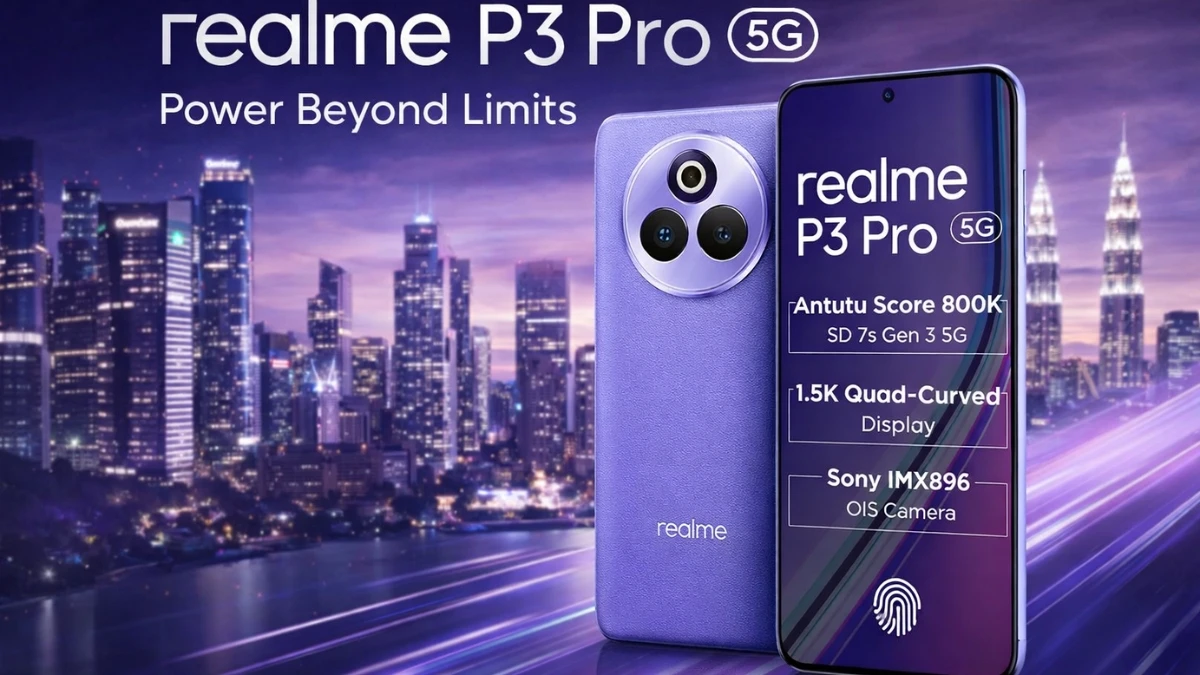
4. Realme P3 Pro 5G - Best for Video Recording
Price: ₹19,999
If your Instagram is more reels than static posts, the Realme P3 Pro makes sense. It's not the best at stills, but video capabilities punch above its weight class.
Camera Performance
The 50MP main camera delivers solid daylight photos. Nothing spectacular - colors are natural, details are good, HDR is balanced. It won't wow you, but it won't disappoint either.
Where this phone earns its spot is video. 4K/60fps recording is rare under ₹20K. The electronic stabilization is mature - walking shots are smooth, panning is judder-free. For casual vloggers and content creators, this handles 80% of what you'd need.
Low-light video is where it shows class advantage. While stills struggle in dim lighting (no OIS), video maintains better detail retention than rivals at 1080p/60fps in evening lighting.
The lack of ultrawide/telephoto hurts versatility. That 2MP depth sensor is the usual useless addition.
Other Highlights
- Display: 6.83" 1.5K OLED, 120Hz - huge for video editing
- Processor: Snapdragon 7s Gen 3 - handles 4K editing smoothly
- Battery: Monster 6000mAh with 80W charging
- Build: IP65 rating for dust/water resistance
Pros & Cons
| PROS | CONS |
|---|---|
| 4K/60fps video recording with mature EIS - best for content creation | Only single main camera - no versatility (no ultrawide/telephoto) |
| Low-light video quality leads the segment at 1080p/60fps | Photo quality lags behind Poco X7 and CMF Phone 2 Pro |
| 6000mAh battery easily handles all-day video shooting | Realme UI packed with bloatware and ads |
| 80W charging refills massive battery in 55 minutes | Only 2 years software support (Samsung gives 4) |
| Large 6.83" display perfect for reviewing/editing footage | Front camera struggles with video in backlit scenarios |
| IP65 rating adds durability confidence | Depth sensor is pointless - should've been ultrawide |
Buying Decision
| BUY IF | SKIP IF |
|---|---|
| Video content creation (reels/vlogs) is your primary use | Photography versatility (ultrawide/telephoto) is important |
| Battery life during recording sessions matters | Clean software experience matters |
| Large display for mobile editing is important | You want the best photo quality for the price |
| You need IP rating for outdoor shooting | Long-term software support is priority |
Verdict: Niche choice for video creators on budget. At ₹19,999 it's expensive for single-camera setup. Worth it at ₹17,999 during sales if video is your focus.
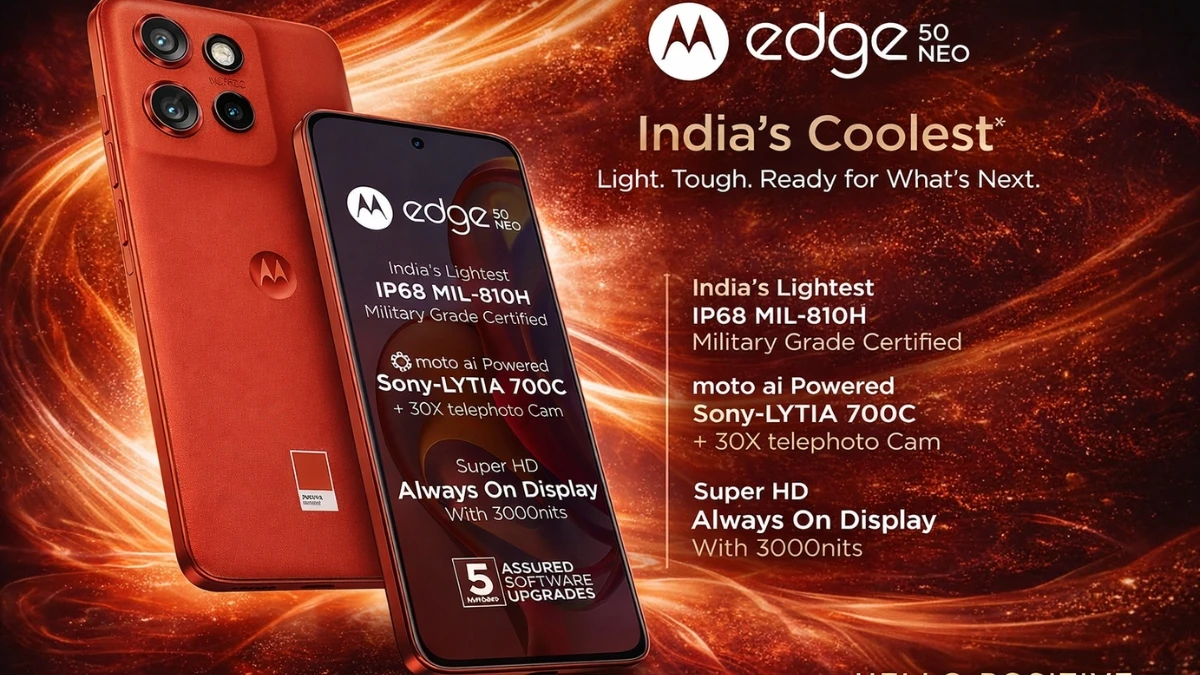
5. Motorola Edge 50 Neo - Most Compact Camera Phone
Price: ₹18,999
Motorola does something brave - makes a compact phone with flagship camera features in 2025 when everyone else chases 6.7"+ displays.
Camera Performance
The 50MP main camera (Sony IMX700) is flagship-grade hardware. Photos are detailed with natural colors. Motorola's color science leans neutral - not as punchy as Samsung, not as contrasty as Poco. Purists will appreciate the accuracy.
The 10MP telephoto (yes, actual telephoto) at 3x optical zoom is impressive for the size. Portrait shots have that compression, though the sensor struggles in low light.
The 13MP ultrawide delivers surprisingly sharp results. Better corner-to-corner sharpness than rivals with 8MP ultrawides.
Low light is good but not great. The smaller body limits thermal management, so night mode processing is slightly slower.
Video: 4K/30fps is stable with good colors. The compact size actually helps handheld shooting.
Other Highlights
- Display: 6.4" FHD+ AMOLED, 120Hz - compact and pocketable
- Processor: Dimensity 7300 - adequate but not gaming-focused
- Build: IP68 rating (best in segment), premium materials
- Battery: Small 4310mAh, but 68W charging compensates
Pros & Cons
| PROS | CONS |
|---|---|
| 10MP telephoto with 3x optical zoom - excellent portrait compression | 4310mAh battery drains by 6PM with moderate camera use |
| IP68 rating (full dust/water protection) - only phone in segment | Smaller body heats up during extended 4K video recording |
| Compact 6.4" size fits pockets and one-hand use | Telephoto unusable indoors/low light - grainy results |
| 13MP ultrawide delivers sharp edge-to-edge results | Dimensity 7300 lags in photo processing vs Snapdragon 7s Gen 3 |
| Clean Android with 5 years updates (tied with Samsung) | Expensive at ₹18,999 for the specs offered |
| Premium build quality with Gorilla Glass 3 protection | Limited storage - 128GB fills up fast with 4K videos |
Buying Decision
| BUY IF | SKIP IF |
|---|---|
| Compact size is non-negotiable (rare in 2025) | Battery life is critical (too small for heavy users) |
| IP68 durability for outdoor photography matters | Value for money matters (expensive for specs) |
| You prefer telephoto over ultrawide for portraits | You shoot lots of indoor/low-light telephoto shots |
| Long-term software support is priority | Large display for photo editing is important |
Verdict: Premium option for those wanting compact camera phone. At ₹18,999 it's overpriced - wait for ₹16,499 to make it worthwhile. Best IP68 camera phone under ₹20K.
Quick Comparison Chart
| Phone | Price | Best For | Camera Rating | Must-Have Feature |
|---|---|---|---|---|
| Poco X7 5G | ₹16,999 | Overall Photography | 9.5/10 | Sony IMX882 sensor |
| Samsung F36 5G | ₹17,499 | Long-term Use | 9/10 | 4 years updates |
| CMF Phone 2 Pro | ₹16,499 | Portrait/Product | 9.3/10 | 50MP telephoto |
| Realme P3 Pro | ₹19,999 | Video Recording | 8.5/10 | 4K/60fps video |
| Moto Edge 50 Neo | ₹18,999 | Compact Build | 8.8/10 | IP68 + telephoto |
Final Verdict: Which One Should You Buy?
For Most People: Poco X7 5G at ₹16,999 offers best bang-for-buck. That Sony sensor is the real deal.
For Content Creators: Realme P3 Pro if video matters more than photos. That 4K/60fps is gold.
For Portrait Lovers: CMF Phone 2 Pro's telephoto changes the game. Nothing else comes close for ₹16,499.
For Long-term Users: Samsung F36 if you keep phones 3+ years. Software support matters.
For Compact Lovers: Moto Edge 50 Neo if you hate massive phones. Wait for price drop though.
What to Avoid
| DON'T DO THIS | DO THIS INSTEAD |
|---|---|
| Buy based on megapixel count alone | Check sensor quality and real camera samples |
| Ignore low-light performance if you shoot after 6PM | Test night mode before buying |
| Trust only marketing photos | Watch actual camera samples on YouTube |
| Forget about software updates | Factor in 2 years vs 4 years support |
| Buy online without research | Test in-store if possible |
Disclaimer: The information provided is based on the latest specifications and user reviews for camera phones under ₹20,000 in 2026. Prices, features, and availability may vary, and it is recommended to verify details before making a purchase decision.